 PopHorror Let's Get Scared
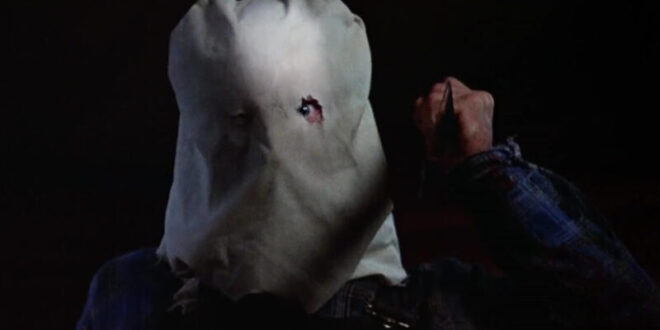
Directed by Steve Miner, Friday the 13th Part 2 is the 1981 sequel that helped turn a one-off horror hit into a full-fledged franchise. While the original film laid the groundwork, this follow-up is where the series begins to settle into its identity, shaping many of the ideas and patterns that would define slasher movies throughout the 1980s.
Friday the 13th Part 2: Passing the Torch (or, Rather, the Pitchfork) to Jason
The story of Friday the 13th Part 2 picks up a few years after the events near Camp Crystal Lake, where Pamela Voorhees (Betsy Palmer) went nuts and killed a bunch of camp counselors to avenge her son’s drowning death years earlier. Pamela did quite a lot of work, but ultimately lost her head.
This time, a new group of young counselors arrives in the area for training, brushing off warnings about its violent past. Their decision to stay, despite clear signs of danger, sets the stage for what follows. One by one, they are stalked and killed by a mysterious figure lurking in the woods, creating a steady sense of tension built on isolation and inevitability.
This film marks the first time Jason Voorhees (Warrington Gillette / Steve Daskewisz) takes center stage as the primary killer. However, this is not the version most people recognize. Instead of the iconic hockey mask, Jason wears a crude sack over his head. The look is rougher and, for some viewers, more unsettling because it feels less stylized and more improvised. The hockey mask, now inseparable from the character, wouldn’t appear until the next installment.
Sure, one might argue the sack is ripped off from the killer in The Town that Dreaded Sundown, but whatever, man.

Other Ways It’s Different
In terms of tone, Friday the 13th Part 2 gets more into suspense and stalking than pure shock. The violence builds gradually, creating what could be called an accumulative effect rather than relying only on sudden scares. The film also strengthens the “final girl” structure through Ginny Field (Amy Steel), who stands out not just for surviving but for how she does it. She uses psychology, observation, and quick thinking rather than brute force or dumb luck, giving the climax a more strategic edge.
Just as important is how the movie refines the slasher formula. It brings together elements that would soon become standard: a remote setting, a group of young adults crossing invisible boundaries, and a killer who punishes them one by one. The pacing, structure, and escalation of tension helped create a template that countless later horror films would follow. Though that has become a cliché, it actually wasn’t as formulaic at the time.
Its importance goes beyond its own story. It establishes Jason as the central villain moving forward, shapes the identity of the franchise, and proves that the series had staying power. While some fans prefer later entries for their spectacle, this film is often seen as one of the stronger early sequels because it balances character, suspense, and myth-building.
For viewers who only know Jason through his later appearances, this entry can feel surprisingly different. But that difference is exactly what makes it essential to F13 fans. It shows the character before he became a pop culture symbol and captures the moment when the series was still defining what it would become.
The movie also stars John Furey as Ginny’s love interest, Paul, and Adrienne King as Alice Hardy, who is so hated by Jason that he actually leaves Camp Crystal Lake to track her down and do what (in his view) must be done. Oh, and let’s not forget about the reemergence of Walt Gorney as Crazy Ralph, who was crazy enough to be right, but right enough to get offed by Jason. If only they’d have listened to you, Ralph! Then again, maybe you should have heeded your own advice and just stayed away from that camp!