 PopHorror Let's Get Scared
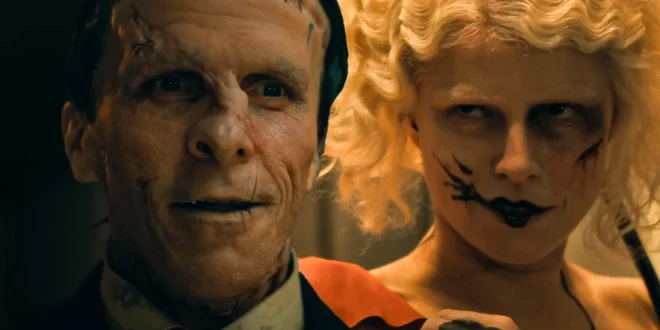
Director Maggie Gyllenhaal approaches gothic mythology with a daring sense of authorship in The Bride! – a film that exhumes one of horror’s most recognizable legends and reshapes it into something electrifying. Gyllenhaal relocates the narrative gravity toward the figure who has long existed on the margins of the story, the bride herself. Rather than orbiting the ambitions of the scientist or the anguish of the Monster, the film centers on a woman whose existence begins in an instant of unnatural creation and unfolds in a world already saturated with expectations about what she must become.
The Bride! unfolds with a sense of existential vertigo – a woman is awakened through an audacious scientific experiment and forced to confront the bewildering immediacy of consciousness.
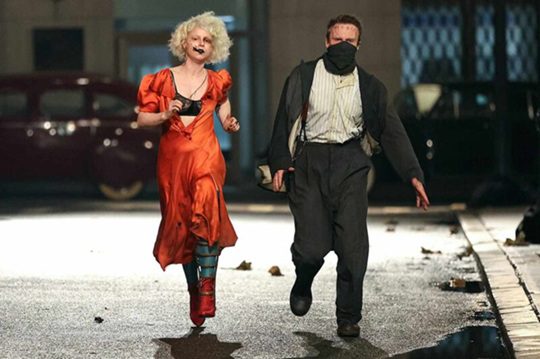
Frank approaches the enigmatic Dr. Euphronious (Annette Bening: American Beauty 1999) seeking the impossible promise of companionship. His request is simple and devastating in equal measure – the creation of a partner who will not abandon him. The emotional weight of that plea reverberates throughout the narrative and the uneasy relationship between the two beings brought into existence by human ambition. Together they take on an almost Bonnie and Clyde role – as Ida (Jessie Buckley: Hamnet 2025) becomes an icon for women.
Earlier cinematic interpretations often treated the bride as a fleeting apparition – an unforgettable image crowned with lightning-struck hair and tragic recoil. Gyllenhaal expands that moment into an entire psychological landscape. The Bride! lingers not on the philosophical aftermath – the disorientation of inhabiting a body, the uneasy performance of identity, and the fragile process of determining whether existence itself is a gift or an imposition. What ultimately gives the film its potency, what makes it feel worthy of the highest praise – the refusal to simplify its central figure. The Bride emerges as a character of profound contradictions – inquisitive yet volatile, sensuous yet guarded, capable of tenderness one moment and destruction the next.
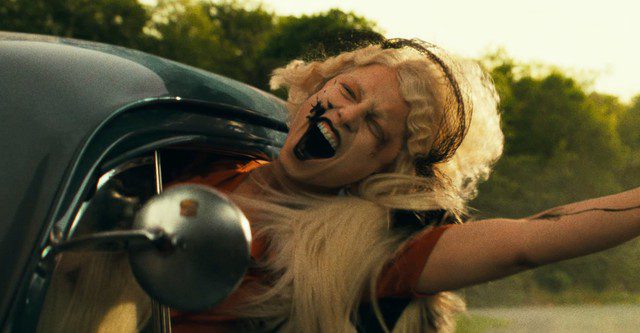
Jessie Buckley (Hamnet 2025) delivers a performance of striking physical and emotional precision as the woman who gradually embraces the identity of the bride. Much of the film’s early movement unfolds through gesture and expression. Buckley communicates the overwhelming shock of existence through minute shifts in posture and gaze, allowing the audience to witness the fragile construction of a self. The performance is fearless in its vulnerability – tracing a path through curiosity, error, and emotional upheaval. Ida’s eventual choice to embrace the role of the Bride carries the quiet gravity of self-determination and an identity reclaimed rather than assigned to her.
Opposite her, Christian Bale (American Psycho 1999) embodies Frank – the film’s interpretation of Frankenstein’s Monster. He has a solemn melancholy that echoes the tragic grandeur of Boris Karloff’s immortal screen creation than to the sleek and modern creature played by Jacob Elordi in Guillermo del Toro’s elegant Frankenstein. The squared brow, the deliberate stillness, the eyes softened by reluctant gentleness. Yet beneath the imposing silhouette lies an aching vulnerability. Bale invests the creature with a palpable loneliness – a being suspended between brute physical power, and a desperate longing for connection.
The Bride feels deeply entwined with the life and legacy of Mary Shelley herself. Shelley composed Frankenstein at only nineteen – surrounded by intellectual circles dominated by philosophical debates about science, progress, and the limits of human power. Her own life had already been marked by profound loss, including the death of a child. A grief that echoes through the novel’s enduring meditation on creation and responsibility. Over the centuries the cultural mythology surrounding Frankenstein frequently eclipsed Shelley’s authorship. Reducing her identity to a footnote beside her husband rather than recognizing her as one of the foundational voices of modern horror.
Gyllenhaal’s film quietly restores that lineage. The story resonates as a meditation on authorship itself – who is allowed to define a life, who claims the authority to create meaning, and who ultimately inherits the consequences of those ambitions? Horror has always possessed a rare capacity to grapple with the largest questions of existence – identity, isolation, power, and the perilous act of bringing life into the world. Yet women within the genre have often been confined to symbolic roles – victims, muses, or cautionary figures orbiting someone else’s narrative gravity. The Bride demonstrates the extraordinary dramatic possibilities that emerge when those figures are granted interiority.
Films of this kind, ambitious, idiosyncratic, and unafraid of emotional complexity – rarely arrive without risk. They depend on audiences willing to embrace work that challenges familiar narratives. The Bride stands as precisely the kind of cinema viewers often claim to crave – strange, thoughtful, and defiantly alive. Supporting films like this ensures that bold reinterpretations of beloved myths continue to emerge from the shadows rather than remain buried within them.
Don’t listen to others, make your own opinions of it – in theaters now.