 PopHorror Let's Get Scared
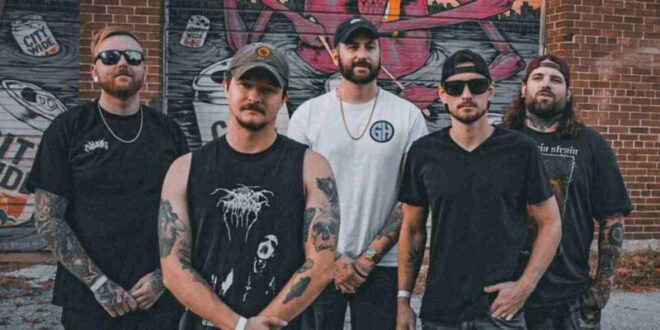
Following label chaos, lineup changes and a brief stint in metalcore experimentation, This Is Me Breathing have returned with what may be their most authentic record to date.
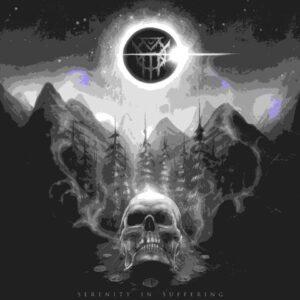
“Serenity in Suffering” — the title track from the St. Louis deathcore outfit’s forthcoming album, out June 26 — delivers four minutes of crushing slams and anxiety-driven lyrics about the dark state of the world, all layered over their signature groovy riffs. Largely penned by vocalist Paul Oster and guitarist Jace Fitzgibbon, Serenity in Suffering perfectly encapsulates the band’s next era — one that feels entirely unapologetic. Drawing influence from The Acacia Strain, Knocked Loose and Korn, This Is Me Breathing are forging a path that’s heavier than ever.
Ahead of the album’s release, PopHorror caught up with Oster and Fitzgibbon to discuss their collaborative writing process, the multi-year journey behind Serenity in Suffering, and the sonic evolution they underwent — including a self-disliked metalcore era — to arrive at This Is Me Breathing‘s definitive sound.
PopHorror: This Is Me Breathing recently released “Serenity in Suffering,” the first single since “Sun Burial” in 2024 and the first track off the upcoming album. Congratulations on that! The message of the song is unique — accepting that maybe not everything actually has a happy ending or turns out for the best, which is something most people don’t want to admit. What inspired that?
Jace Fitzgibbon: Paul wrote the lyrics. I’m going to speculate… I know he was raised in a Catholic household and he was not allowed to listen to non-secular music until he was in high school. That’s when he ventured out and started listening to Impending Doom because they were technically secular. He writes a lot of his lyrics based off his experiences growing up religious and not being religious anymore. With religion, there’s always a plan. No matter what happens, there’s a plan. So this is more of, no, sometimes shit just sucks?
Paul Oster: The past couple releases we’ve done, I’ve balanced lyrical content in between personal experiences and just what’s going on in the world. We released our second EP when COVID happened and things have cascadingly gotten more and more bleak, and I think that reflects a lot on this record. It’s probably the least personal lyrics I’ve written and more focused on societal things.
Jace Fitzgibbon: So my speculative answer on his motivation was completely wrong. Life just kind of sucks. [laughs]
PopHorror: The two of your wrote the majority of Serenity in Suffering. Is that traditional for this band, or was this something new?
Jace Fitzgibbon: Paul and I, we work really well together when we write, not that I don’t work well with other members of the band, but we like to not mess around — well, we mess around with direction. We usually can tell what each other likes and doesn’t like, how we would finish something or if it doesn’t sound good to us. Our free time overlaps to write, so we had a lot of demos written and we looked through which ones we felt had the most potential. Then what we normally do is we take them to our producer, who helps write a lot of stuff, with the expectation that he’s going to do this or that. But we go in with usually 90% of the song written and expecting something to be added. On our last EP [Beast of Bedlam], Paul and I wrote two or three of the songs. So the most recent releases, they’ve been the most consistent with Paul and I writing a decent chunk.
A Brief — and Necessary — Stint In Metalcore
PopHorror: You’ve described “Serenity in Suffering” and this album as This Is Me Breathing‘s most “true” sound to date. What does that mean to you? And was there trial and error to get to this place?
Jace Fitzgibbon: When we started, before Paul was even in the band, we were in that era where metalcore was really popping off. So when I joined, they’d only played one show and they were going hard for a Miss May I sound. I can’t write that type of music. It’s just not fun for me. Writing clean, melodic parts is hard — not hard in an actual technical sense, but just to where it sounds good. And the person who was doing the clean singing in the band also didn’t have that high of a register, so it just didn’t sound good overall. We were kind of forcing it. Once we moved on from a couple of members and got new guys, we went slightly heavier, which is when our Lazarus EP was written. We then departed from our drummer and vocalist after we already had new music written, so when Paul and our current drummer [Zach Moore] came in, we redid everything and our next EP [Gomorrah] was even closer to how we wanted to go.
When we did our Beast of Bedlam EP, that was the real start of, “Okay, I think this is where we want to be and want to start going more.” It had more technical stuff in it. Paul’s vocals were written around knowing his vocal style and patterns he likes doing. Then when we did this one, it felt like we didn’t have constraints on it. We weren’t like, “Oh, we need to sound like this, people will be confused if we write something that doesn’t sound like our typical stuff.” We didn’t care. We were going to write whatever we wanted. Even if it’s incredibly down tempo, gurgly breakdowns or fast parts that are more groovy. We usually write stuff that has some riffs that sound groovy because none of us really like shredding — that, to us, feels like try hard. But yes, this is more of how we want This Is Me Breathing to sound.
Paul Oster: My buddy Zach, who’s the drummer of the band now, he tried out and was like, “Dude, you should totally come in and do vocals.” I knew them from their previous sound and I said, “This is not what I’m gonna do!” He was like, “This is heavier, it’s different. There’s no clean singing.” I was like, “Okay, I can work with that.”
Jace Fitzgibbon: Yeah. It was just not good. At the time, it felt like pulling teeth. But in retrospect, it was only, like, a couple of years.
PopHorror: Do you feel like the early metalcore experimentation was necessary to get to your current sound?
Jace Fitzgibbon: Yes. For me personally, this is the first and only band I’ve ever been in, so writing and playing in a band was completely foreign to me. Then once I had my own style and vibe of how I write, that changed and influenced a lot. Thankfully, our other member that’s been in it for the exact same amount of time, he had the same trajectory where he’s like, “I don’t want to play this metalcore stuff anymore.”
PopHorror: Who are some of your musical influences? Any specific for this album?
Jace Fitzgibbon: Every Time I Die is my all-time favorite band. RIP. Let Live is also one of my all-time favorites. RIP. The Chariot, RIP. [laughs] Sorry, I like all bands that have ceased to exist anymore. Oh, and Deftones, they are a big influence on me. For this album specifically, we wrote this predominantly in 2022 and 2023, and I was listening to a lot of old nu metal — Korn, Limp Bizkit, that type of stuff. So that was influencing a decent chunk of my writing. There’s definitely some lead interludes that are very Korn influenced and there’s a specific song that I wrote the main riff to that is very nu metal-y. And Paul, he doesn’t play guitar in the band, but he wrote a decent amount of the guitar parts. He’s like an encyclopedia of metal. The most obscure stuff, he’s like, “Oh, yeah, I’ve listened to it.” He knows everything.
Paul Oster: I grew up homeschooled, so I spent all my time listening to and researching metal music. I’d say The Acacia Strain was probably my biggest influence. To anybody who knows me, that’s not a surprise. I really, really take a lot of influence from Vincent [Bennett], especially on this album with it being as bleak and nihilistic as it is. I definitely took a page out of his book. Instrumentally, we took a lot of influence from Knocked Loose — which ended up being funny because Jeff Dunne, who also did production with Knocked Loose, mastered the album. So that was pretty cool. A lot more hardcore influences than some of our last records.
The Long Road To Releasing Serenity in Suffering
PopHorror: You mentioned that most of this album was written in 2022 and 2023. Did you hold it intentionally until now or were there roadblocks in getting it out?
Jace Fitzgibbon: No, it was not intentional. Our manager was pitching us to labels, and we had interest from one that was going back and forth with us. They said they were restarting back up and they wanted to have us, and the timeline for release would be maybe in a couple months. We were like, “Okay, we’ll wait.” But it was just a lot of kicking the can down the road and them being like, “Yeah, sure, we want to move forward with them, we’re just getting A, B and C together.” But it never happened. It got to a point where we were like, “Okay, they don’t have their stuff together as much as they should.” So we decided that we needed to release it. We had never done marketing and PR stuff on our own. We just self-released a lot and it didn’t get much traction, so we knew we needed to do something different. Our manager talked to Earshot Media and that’s who we went with, so a lot of this stuff is new to us.
But yeah, we were going back and forth with the label for over a year, so that’s why it took so long. It had been almost two years to the day that we released “Serenity in Suffering” from our last single that we did. Shockingly, we didn’t drop off incredibly hard. It was frustrating and a lot of us were getting really discouraged. The last thing we were told by the label was that they’d release it in a year. We were like, “No fucking way, we cannot do that.” And since we’d been sitting on an album’s worth of material, we’ve been writing other stuff, but we haven’t gotten back with our producer to start recording because we were still doing all this. So now, our new writing can start ramping up and hopefully, we’ll be able to release something by mid-2027.
PopHorror: Is there one song that you’re most excited for people to hear off the new album?
Jace Fitzgibbon: Mine’s “A Hill to Die Upon,” the one I was talking about that’s very nu metal-ish. That’s the one I’m excited for people to hear and to play.
Paul Oster: I would say “First Degree,” which is the next single coming out, so I only have to wait about another month before people hear it. But that’s by far my favorite. We’ve already been experimenting playing that one live on the last tour we did and it’s gone over pretty well, so I’m excited.
Giving Their All On Stage
PopHorror: For anyone who hasn’t seen you live, what’s a This Is Me Breathing show like?
Paul Oster: We’re harsher live than what we are on the record. Our records, the producer we go to captures a real modern sound. Live, I feel like we’re a lot harsher and a little bit noisier than what we come across on the record. And energy — energy over everything. There’s nothing more boring than watching a band of four dudes stand in a spot on stage with no movement, no energy. I love getting in the crowd’s face. If nobody’s moshing, I’ll get in there and start it myself. I really take a lot of influence from hardcore bands where I want the energy to be high, very loud, very obnoxious.
Jace Fitzgibbon: In the past six years, I’ve focused on not just standing there and making sure I’m playing every single thing perfectly. I like to move around, drop down, all that type of stuff. I still play our stuff accurately, but I’m not freaking out to make sure everything is 100% right and just standing there like a statue. Our bassist [Nick Kostielney] moves around a lot. We just really try to convey that we’re having fun while playing our stuff.
PopHorror: You guys have opened for or toured with some really cool bands — Beartooth, Lorna Shore. What did you learn from being around these other bands? Did watching them influence your own live shows at all?
Jace Fitzgibbon: One-hundred percent. Any big band that we open for, we usually notice something and take something from it. Whether it’s how they’re doing merch, how they show up and present themselves, how their tour managers are, what they look for when they show up and what they need. Live performances too, we look for how their lights are going, how they run backtracks, all that stuff. Every show.
Paul Oster: We’ve taken a lot of notes from playing with bigger bands. Recently, we all got in-ears. We’ve taken little upgrades and tidbits from other bands as we’ve gotten more opportunities to open for people. And the most important thing we’ve taken away is recognizing that everybody in the scene, a lot of them are just fans of the genre. They’re all just really cool. We haven’t encountered many arrogant people. They are very far and few between in this scene.
Jace Fitzgibbon: I’ll say with Beartooth, Caleb [Shomo] — who you would think would have the most arrogance — is the most humble dude. We opened for them back in, like, 2016 before Paul was even in the band. He was incredibly nice. At that point, Beartooth was still big enough that if anybody’s got room to have an ego, he would. But he was super, super nice.
PopHorror: Is there anyone you haven’t opened for or toured with that you’d love to some day?
Jace Fitzgibbon: Acacia Strain, Knocked Loose.
Paul Oster: Acacia Strain, for me, is No. 1. I’ve seen them probably 20 times live and, somehow, with all the bands we’ve opened for, we’ve just never crossed paths with them. I would love to tour, play a show or collaborate with them in any way.
The Influence of Unlikely Films
PopHorror: I’m so curious — where did you get your band name from?
Jace Fitzgibbon: It was created by two guys who are no longer in the band because they really liked the movie Grosse Point Blank with John Cusack. He’s a hit man who’s going back to his hometown for his high school sweetheart. A therapist is telling him how to calm down and not kill people. He tells him, “This is me breathing,” and they took it from that. Our entire first EP, every song is a quote from that movie. We all wish we could change the name, but our manager told us, similar to Devil Wears Prada and people with hokey names, it’s like, “Well, when you go to search ‘This Is Me Breathing,’ you’re the only thing that comes up,” as opposed to his band, Warship, and there’s hundreds of different things that come up. It’s like, well, it sticks out. We’ve got that for ourselves, so that’s why we just left it.
Paul Oster: It has been a conversation before of, do we change it? But we’ve played enough shows, released enough music and there’s enough T-shirts with the name on it, why do it?
PopHorror: And here I thought it was some deep metaphorical thing, like, this…is…ME…breathing.
Paul Oster: [laughs] You’re not the only one who thinks that. A lot of people do. Even though I wasn’t around when it was named, I would like to say there’s some sort of a deeper meaning to it, but it’s just a movie quote.
PopHorror: Since we’re PopHorror, I have to ask — what’s your favorite scary movie? And has anything in the horror genre influenced your music or aesthetic at all?
Jace Fitzgibbon: My favorite movie of all time, which I count as a horror because it’s a slasher in space, is Alien. That’s had an influence. When we do some atmospheric stuff, I listen to a lot of movie scores. My favorite straight horror movie is probably Scream because I was a little kid when that came out, hence why I was so pissed at Scream 7.
Paul Oster: I would have to say the original Texas Chainsaw [our review]. That one I saw at a young age and that had a profound impact on me. I didn’t want to watch anything but horror ever since then. As far as influence in the music, we’ve taken a couple of samples and backgrounds. We took one on “Sun Burial” from Midsommar. And then it’s not really a horror, but we took one on “Sodom” from American Psycho.
PopHorror: To wrap up, is there anything you hope listeners feel or experience as they listen to Serenity in Suffering?
Jace Fitzgibbon: I’d like people to listen to it and see that it’s a clear step up in most, if not all aspects. Jeff Dunne’s mastering really captured more of our live sound and sounding raw. Not that our previous recordings were bad or anything like that. You can tell a difference in listening to them that, “Oh, someone different touched this,” which I appreciate.
Paul Oster: I would say the same. This is the closest interpretation of what we do live actually captured on recording. I’m looking at this as a fun record. The energy’s there. Even though the overtones, the lyrical content is super dark, kind of nihilistic, it’s got a lot of energy to it. If I want anybody to walk away with anything, it’s that it’s a step up and the truest-feeling record to what we do.
Thanks for speaking with us, Jace and Paul! Serenity in Suffering is out June 26.