 PopHorror Let's Get Scared
Jason Voorhees stands as one of the most recognizable figures in horror cinema. As the central antagonist of the long-running Friday the 13th franchise, he has become a cultural icon whose image is instantly associated with fear, suspense, and relentless violence. Often described as an unstoppable force, Jason is typically depicted as a silent killer stalking the woods surrounding Camp Crystal Lake while armed with a variety of weapons, most famously his machete. Over the decades, the character evolved from a tragic backstory into a near-mythological horror figure whose influence extends far beyond the films themselves.
The Origins of Jason Voorhees
Jason first appeared in Friday the 13th (1980), although he was not the primary killer in that film. Instead, the murders are committed by his mother, Pamela Voorhees, who seeks revenge against the camp counselors she blames for her son’s death.
According to the story, young Jason drowned in Camp Crystal Lake after negligent counselors failed to supervise him. Pamela’s grief and anger drive her murderous rampage, culminating in the memorable accusation that the counselors were distracted while her child was dying. The camp itself earns the ominous nickname “Camp Blood,” reflecting the dark history that surrounds it.
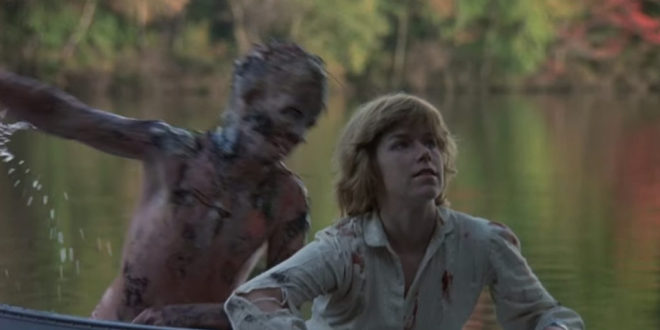
The film’s shocking conclusion features what appears to be a deformed young Jason suddenly leaping from Crystal Lake and attacking the surviving heroine. Whether this moment is real or a nightmare remains ambiguous, but it established the mythology that would define the franchise. As one character ominously warns, “That little boy, Jason… he’s still out there.”
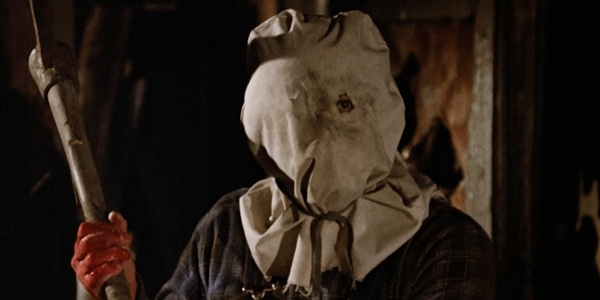
Jason became the franchise’s central antagonist in Friday the 13th Part 2 (1981). In that film, he conceals his face with a burlap sack rather than the hockey mask that would later become synonymous with the character. The iconic hockey mask made its first appearance in Friday the 13th Part III (1982), permanently transforming Jason into one of the most recognizable figures in horror history.
Appearance and Personality
Throughout the series, Jason’s appearance changes considerably, but certain characteristics remain constant. He is typically portrayed as a large, imposing figure with severe facial deformities, dressed in worn work clothes and hidden behind his hockey mask. His physical presence alone is often enough to intimidate both characters and audiences.
One of Jason’s defining traits is his silence. Unlike many horror villains who taunt or threaten their victims, Jason rarely speaks at all. This near-total absence of dialogue contributes to his mystique and makes him feel less like a person and more like an unstoppable force. His quiet nature has led many viewers to see him as something beyond human—a relentless embodiment of death itself.
At the same time, some interpretations emphasize the tragedy at the heart of the character. Jason’s violence originates from a childhood marked by neglect, bullying, isolation, and trauma. While his actions are unquestionably horrific, the series occasionally presents him as a victim whose suffering transformed him into a monster.
From Human Killer to Supernatural Monster
In the earliest films, Jason is portrayed as a human being, albeit one possessing extraordinary strength, endurance, and resilience. Even then, his ability to survive severe injuries stretched credibility, helping establish his larger-than-life reputation.
As the franchise progressed, however, the character became increasingly supernatural. Jason demonstrated immense physical strength, remarkable durability, and an apparent inability to remain dead. He repeatedly survived injuries that would be fatal to ordinary humans and often appeared capable of moving with surprising stealth despite his massive size.
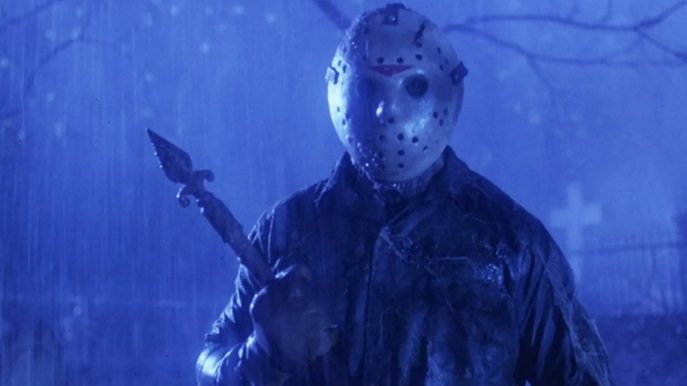
A major turning point occurred in Jason Lives: Friday the 13th Part VI (1986), where Jason is resurrected and effectively transformed more thoroughly into an undead slasher monster. From that point forward, he resembles a zombie-like creature more than a living human. This shift answered some questions while creating new ones, leading fans to debate whether Jason should be considered a mutant, a ghost, a zombie, or something entirely unique.
Key Art
Expanding the Franchise
As the series continued, the stories became increasingly ambitious and exaggerated. What began as a relatively grounded slasher series eventually ventured into science fiction and crossover territory.
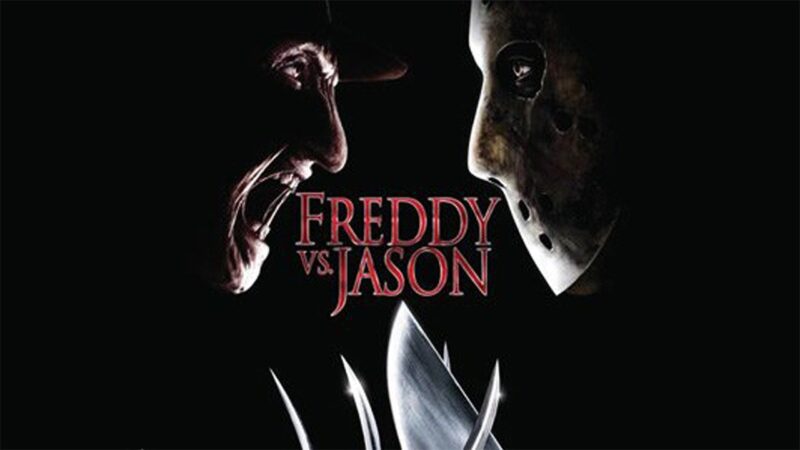
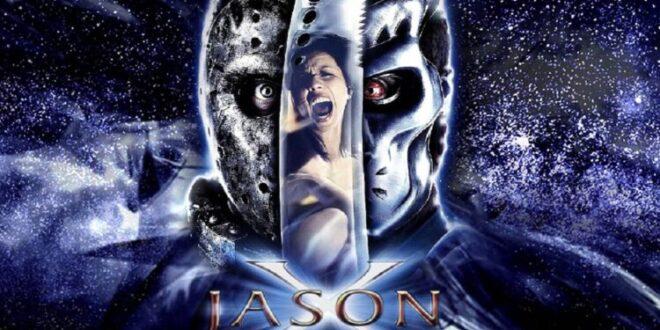
In Jason X (2001), the character is transported into the distant future and unleashed aboard a spacecraft. The film even upgrades him into a futuristic version sometimes compared to a horror-themed super-soldier. Another notable entry, Freddy vs. Jason (2003), brought together two of horror’s most famous villains as Jason battled Freddy Krueger in a long-awaited crossover event.
These later films demonstrated the franchise’s willingness to embrace increasingly outlandish concepts while keeping Jason at the center of the action.
Cultural Impact
Few horror characters have achieved the level of recognition enjoyed by Jason Voorhees. Alongside fellow slasher legends such as Michael Myers, Freddy Krueger, and Leatherface, Jason helped define the slasher genre for multiple generations.
His hockey mask has become one of the most enduring images in popular culture. Even people who have never seen a Friday the 13th film often recognize the mask and immediately associate it with horror. The character’s influence can be seen in movies, video games, comic books, heavy metal imagery, rap imagery (Eminem), Halloween costumes, internet memes, and countless parodies.
Jason is also closely associated with the “final girl” concept that became a hallmark of slasher films. In many entries, a resourceful female survivor ultimately confronts the seemingly unstoppable killer, creating a recurring narrative structure that has influenced horror storytelling for decades.
The Actors Behind the Mask
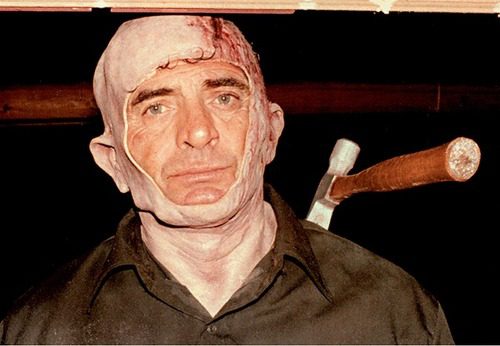
Numerous performers portrayed Jason over the course of the franchise, each bringing their own physical interpretation to the role. Among them, the most celebrated is often Kane Hodder, who played Jason in four consecutive films and became closely associated with the character thanks to his distinctive performance style.
Other memorable portrayals came from Ted White, C. J. Graham, and Derek Mears (and plenty of others . Each actor contributed to the character’s evolution while maintaining the imposing physical presence audiences expected.
Themes and Interpretations
Beyond the violence and suspense, many critics and scholars have explored deeper themes within the Jason mythology. Some view him as a symbol of uncontrolled violence and vengeance. Others interpret him as a manifestation of social anxieties surrounding adolescence, sexuality, and changing cultural values (or something like that).
The character also embodies themes of trauma and neglect. Jason’s origins stem from a childhood tragedy that never truly fades, making him a representation of the persistence of the past and the consequences of unresolved suffering. His repeated returns from apparent death reinforce the idea that certain fears and traumas can never be completely buried.
The isolated setting of Crystal Lake further amplifies these themes, turning the rural landscape into a place where civilization’s protections disappear and primal fears emerge.

Essential Jason Voorhees Films
For viewers interested in experiencing the most important chapters of Jason’s story, several films stand out. The original Friday the 13th establishes the mythology surrounding Camp Crystal Lake and Pamela Voorhees. Friday the 13th Part 2 introduces Jason as the primary threat, while Friday the 13th Part III debuts the iconic hockey mask.
Friday the 13th: The Final Chapter is frequently regarded as one of the strongest entries in the series, and Jason Lives: Friday the 13th Part VI marks the character’s transformation into a supernatural monster. Finally, Freddy vs. Jason showcases the character in one of horror cinema’s most ambitious crossover events.
A Lasting Horror Legend
Despite the franchise’s shifts in tone—from straightforward slasher horror to self-aware comedy and even science fiction—Jason Voorhees has remained its enduring centerpiece. Whether portrayed as a tragic victim, an undead monster, or an unstoppable force of nature, he continues to captivate audiences around the world.
More than four decades after his first appearance, Jason remains one of horror’s most enduring legends. The hockey mask, the silent stalking figure, and the blood-soaked history of Camp Crystal Lake have secured his place as one of cinema’s most unforgettable nightmares.