 PopHorror Let's Get Scared
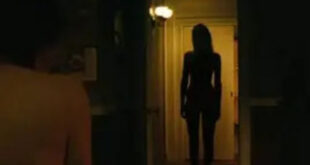
Nothing is as it seems when filmmaker Emily Wyland (Brittany O’Grady: White Lotus 2021) teams up with cinematographer Danny (E. J. Bonilla: The Exorcist: Believer 2023) to shoot In Our Blood, an intimate documentary about reuniting with Emily’s estranged mother (Alanna Ubach: The Last of Us 2025) after a decade apart. When her mother suddenly goes missing, possibly succumbing to the addictions that first tore her family apart, Emily and Danny must piece together increasingly sinister clues to find her before it’s too late. If the horrors Emily faces are in her blood, pray it’s not contagious!
Directed by Oscar-nominated documentary filmmaker Pedro Kos (Lead Me Home 2021) in his first narrative feature, In Our Blood weaves a twisted tale of reconciling with the ghosts of one’s past and confronting the complicity shared in creating a world that preys on the most vulnerable.
Found-footage films seldom appear now due to their waning popularity, but some instances remind viewers of their purpose. This subgenre allows for an intended rawness to be felt both technically and narratively. Structurally, In Our Blood‘s editing feels loose yet purposeful as it works to establish Emily’s desire to locate her mother. In the final act, the editing loses its “authentic” feel, but at that point, most other connections to reality are lost. As the movie’s title implies, there is most definitely blood, but there’s also an injection of social commentary throughout. As far as genres go, it feels suited as a horror drama, as much of the tension derives from the uneasiness of the character dynamics rather than overt horror.

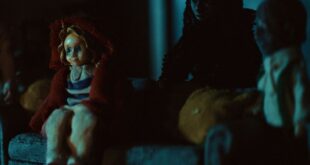
In Our Blood is telling a more complex story than what is on display. While it’s true the film can be enjoyed on a purely cursory level, the subtext that lies just beneath the surface is what makes the most impact. It features a mixture of everyday horrors and fictionalized terrors. Without divulging too much of the plot, there are plenty of thematic elements that are touched upon, including drug addiction, racism, xenophobia, and generational trauma. Albeit certain themes aren’t handled subliminally, they’re touched upon with enough nuance to add depth. Kos’s previous work on documentaries about unhoused folk and fighting religious conventions makes it apparent that he has a knack for sharing stories of underprivileged and marginalized groups. It’s no coincidence that these topics are then handled in a mockumentary-style film.

Slow pacing is a lingering issue that plagues Kos’s feature. While the longer scenes of dialogue add to the narrative, it can feel meandering at times. Despite an initial intrigue of a missing person, it slowly begins to lose traction as the film progresses. The audience is met with the repetitive formula of constant reminders that Emily’s mom is missing. While her concern is commendable, it gets to the point of ad nauseam. By the time the credits roll, one might wonder if the experience would’ve been better as a short film.

In Our Blood bridges the gap between fictional and real-life horror. It’s a smart film that works like a twisted Rorschach test. The horror can run far deeper depending on how audiences interpret its message. Pedro Kos makes a strong debut that will hopefully lead to more conscious horror in the future.