 PopHorror Let's Get Scared
When horror fans think of Wes Craven, films like A Nightmare on Elm Street (1984) and Scream (1996) usually dominate the conversation. Those movies transformed the genre and established Craven as one of horror’s greatest filmmakers. Yet one of his most unusual and ambitious works arrived between those landmarks: 1991’s The People Under the Stairs.
Written and directed by Craven, the film blends horror, dark comedy, social satire, and fairy-tale adventure into something unlike almost anything else released during the era. Although it never achieved the commercial or cultural impact of Craven’s biggest hits, its reputation has grown steadily over the years, with many critics and fans now considering it among his most personal and politically charged films. It also stands apart in Craven’s filmography, which even includes the Oscar-nominated drama Music of the Heart (1999), his only straight dramatic feature.
A House Full of Nightmares
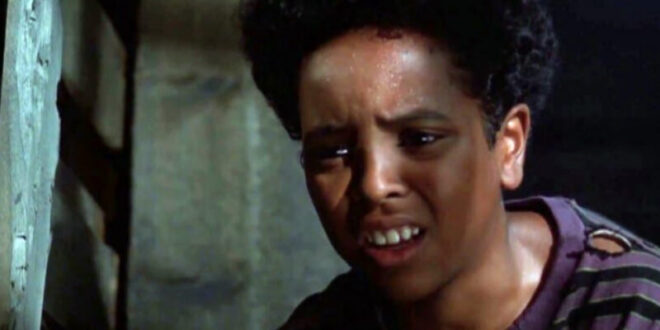
The story follows 13-year-old Poindexter “Fool” Williams (Brandon Adams), an intelligent boy growing up in an impoverished Los Angeles neighborhood. His family faces eviction while his mother desperately needs expensive cancer treatment. Hoping to solve both problems, Fool reluctantly joins two burglars planning to rob the mansion owned by their wealthy landlords.
Once inside, however, what appears to be a simple burglary turns into a desperate fight for survival.
The mansion is less a home than a living nightmare, filled with hidden passageways, secret rooms, deadly traps, and imprisoned children. Its owners—known only as Mommy (Wendy Robie) and Daddy (Everett McGill)—have transformed the sprawling house into a fortress where outsiders rarely escape alive.
Along the way, Fool discovers Alice (A.J. Langer), the couple’s abused “daughter,” and realizes he must not only survive but rescue her and uncover the horrifying secrets hidden beneath the house.
An Outstanding Cast
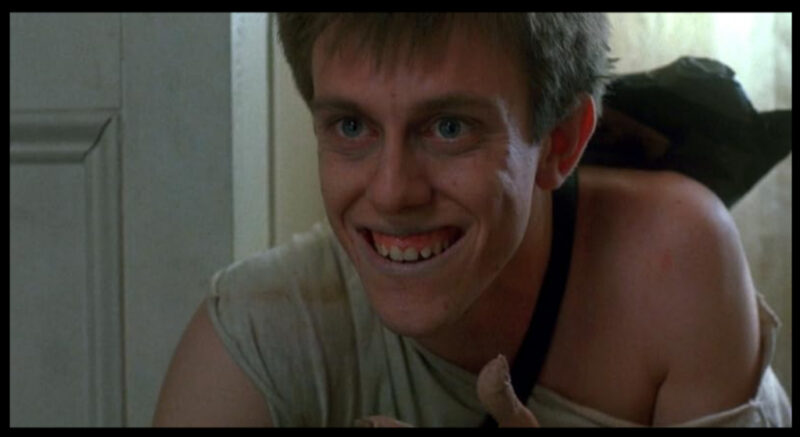
Alongside Brandon Adams as Fool, the film features Everett McGill as Daddy, Wendy Robie as Mommy, A.J. Langer as Alice, Ving Rhames as Leroy, Bill Cobbs as Grandpa Booker, Kelly Jo Minter as Ruby Williams, and Sean Whalen as Roach. One of the movie’s greatest pleasures is seeing McGill and Robie reunite after previously playing another memorably bizarre couple in David Lynch’s Twin Peaks. Their chemistry helps make Mommy and Daddy two of horror’s most unforgettable villains.
More Than a Haunted House
At first glance, The People Under the Stairs resembles a classic “trapped inside a creepy house” thriller. In reality, Craven uses the mansion as an allegory for America itself, and has even said the house symbolized Reagan-era America.
The film explores economic inequality, slumlords exploiting poor communities, wealth hoarding, gentrification, racism, child abuse, religious extremism, and authoritarian family structures. The Robesons literally own the homes of struggling families while secretly hoarding enormous amounts of gold beneath their own mansion. Their wealth depends on exploiting the very people they consider beneath them, turning the house into a symbol of privilege built upon suffering.
Equally significant is Fool himself. In an era when Black protagonists rarely occupied the center of mainstream horror films, Craven made a young Black boy the unquestioned hero. Fool survives not through brute strength but through intelligence, empathy, courage, and quick thinking. Modern critics frequently point to this choice as one reason the film has aged remarkably well.
Horror Through the Lens of a Fairy Tale
Craven often described the movie as closer to a dark fairy tale than a conventional slasher, and the influence is obvious throughout. The story features a frightening house filled with hidden secrets, hidden treasure, wicked parental figures, imprisoned children awaiting rescue, and a brave young hero forced to navigate secret passageways. The mansion itself feels like a Gothic version of the witch’s house from Hansel and Gretel, simultaneously fascinating and terrifying. Much like classic fairy tales, the story places a vulnerable child into an impossible situation where cleverness matters more than physical power.
Mommy and Daddy
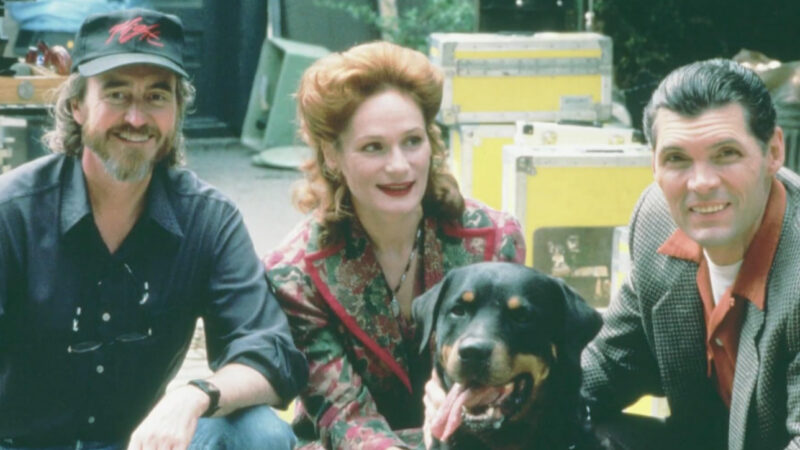
Few horror villains are stranger than Mommy and Daddy.
Daddy is a violent survivalist who patrols his home carrying a shotgun while dressed in black leather bondage gear. Mommy presents herself as sweet, refined, and deeply religious, yet proves equally cruel and manipulative behind closed doors.
Together they embody hypocrisy disguised as morality, religious fanaticism, abusive authoritarian parenting, and white suburban respectability masking monstrous behavior. Their names are intentionally generic. Rather than functioning as ordinary individuals, “Mommy” and “Daddy” become exaggerated embodiments of distorted parental authority and abusive power.
Who Are the People Under the Stairs?
The film’s title refers to the mutilated children imprisoned beneath the mansion.
Each child was brutally punished for violating one of the Robesons’ rigid rules based on the proverb “See no evil, hear no evil, speak no evil.” Some had their tongues removed, while others endured years of horrific abuse. After prolonged captivity, they have become feral and cannibalistic, making them simultaneously terrifying monsters and tragic victims, seemingly led by a “family member” known as Stairmaster (Yan Birch).
Craven reportedly conceived the idea after reading about a real-life police raid that uncovered children imprisoned inside a house, transforming a shocking news story into one of horror’s most disturbing concepts.
A Genre-Blending Experience
One reason The People Under the Stairs continues to stand out is its refusal to stay within a single genre.
One moment, it’s genuinely frightening. The next, it’s an outrageous black comedy. Soon afterward, it transforms into an action-adventure story viewed through a child’s perspective. This constant tonal shift initially puzzled some critics in 1991, but today many viewers consider it one of the film’s defining strengths. Craven balances suspense, humor, fantasy, and social commentary without allowing any one element to overwhelm the others.
Increasingly Remembered
Produced on an estimated budget of about $6 million, The People Under the Stairs earned more than $31 million worldwide, making it a solid financial success. Although contemporary reviews were mixed, the film’s reputation has steadily improved over the decades. I
t is now widely regarded as one of Wes Craven’s most underrated films and an early precursor to the wave of socially conscious horror that would later include movies such as Jordan Peele’s Get Out. While the two films differ significantly in style, both use horror to explore racial and economic power structures hidden beneath seemingly ordinary American life.
Unlike many early-1990s horror films that relied primarily on elaborate kills or jump scares, The People Under the Stairs uses horror to examine systemic injustice without sacrificing entertainment. Beneath its bizarre villains, elaborate booby traps, and labyrinthine mansion lies a story about exploitation, inequality, and the abuse of power.
More than three decades after its release, the film feels remarkably modern. Its memorable villains, inventive production design, fairy-tale atmosphere, and sharp social commentary have transformed what was once an overlooked genre oddity into one of Wes Craven’s cult classics — and one of the clearest examples of his ability to combine genuine scares with meaningful “woke” social commentary.