 PopHorror Let's Get Scared
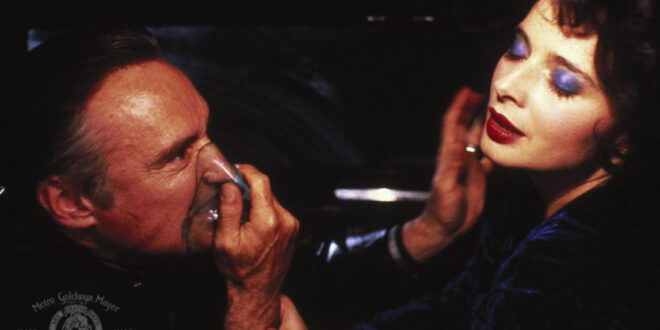
Blue Velvet is widely regarded as one of director David Lynch’s greatest achievements and one of the defining films of American independent cinema. Blending mystery, psychological thriller, film noir, and surrealism, the film explores the disturbing contrast between the idyllic image of small-town America and the violence and depravity hidden just beneath its surface.
The story follows Jeffrey Beaumont (Kyle MacLachlan), a college student who returns to his hometown after his father suffers a medical emergency. While walking through an empty field, Jeffrey discovers a severed human ear, a shocking find that pulls him into a dangerous investigation involving nightclub singer Dorothy Vallens (Isabella Rossellini) and the terrifying and bizarre criminal Frank Booth, played by Dennis Hopper in one of the most celebrated performances of his career.
This movie also stars (or features, if you’ll quibble about the language) Laura Dern, Hope Lange, George Dickerson, Dean Stockwell, Priscilla Pointer, Brad Dourif (the voice of Chucky), and Jack Nance (known as the main guy from Lynch’s Eraserhead).
Blue Velvet is Not Your Typical Mystery
Although the premise resembles a detective mystery, Blue Velvet quickly becomes something far stranger. Rather than simply solving a crime, Jeffrey descends into a hidden world of obsession, voyeurism, abuse, and psychological manipulation. As he uncovers increasingly disturbing secrets, he is forced to confront not only the darkness within others but also his own fascination with it.
One of the film’s central themes is that evil often exists beneath seemingly ordinary appearances. Lynch establishes this idea in the unforgettable opening sequence, where bright flowers, white picket fences, and cheerful suburban neighborhoods suddenly give way to insects swarming beneath a perfectly manicured lawn. The sequence serves as a visual metaphor for the film’s core message: beneath society’s polished exterior lies something unsettling and chaotic.
The film also explores the conflict between innocence and corruption, the ethics of voyeurism, the duality of human nature, sexual obsession, power, and the hidden violence lurking beneath suburban life. Rather than offering simple explanations, Lynch deliberately leaves much of the symbolism open to interpretation, encouraging audiences to draw their own conclusions instead of providing definitive answers.
What’s Wrong with Frank?
Few movie villains have become as iconically strange as Frank Booth. Explosive, unpredictable, and deeply unsettling, Frank constantly shifts between childlike vulnerability and terrifying brutality. His ritualistic use of an inhalant before his violent outbursts is never fully explained, making the character even more disturbing. Dennis Hopper’s fearless performance revitalized his career and is frequently cited among the greatest villain portrayals in cinema history.
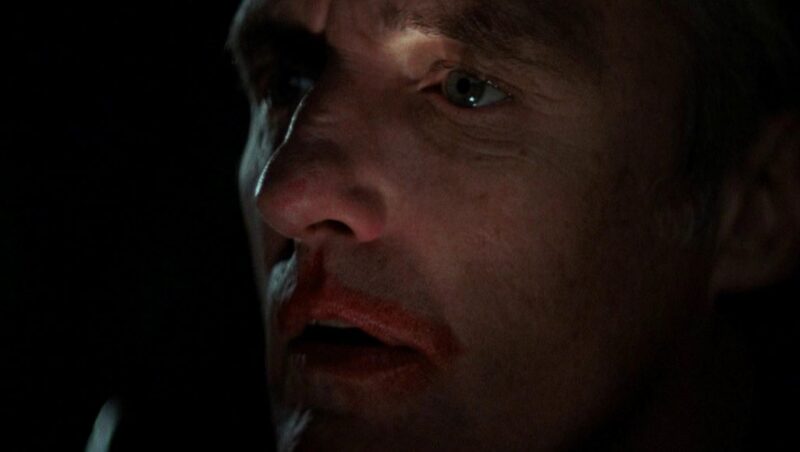
Lynch’s distinctive visual style gives Blue Velvet its dreamlike atmosphere despite the film’s grounded suburban setting. Rich, saturated colors — particularly deep blues and vivid reds — create an almost hypnotic visual palette. Long stretches of silence are interrupted by sudden bursts of shocking violence, while symbolic imagery and surreal moments create the constant impression that reality itself may be slipping into a nightmare. The result is a film that feels simultaneously realistic and dreamlike.
Music to Your Ears
Music plays an equally important role in establishing the film’s atmosphere. The soundtrack combines nostalgic pop songs from the 1950s and 60s with Angelo Badalamenti’s haunting orchestral score, beginning a creative partnership that would later produce the iconic music of Twin Peaks. Bobby Vinton’s classic recording of “Blue Velvet” transforms from a romantic ballad into something haunting through its repeated use throughout the film.
Of course, one also cannot hear a certain Roy Orbison song the same way again after watching this film:
Upon its release, Blue Velvet generated considerable controversy because of its unusual blend of sexual content and disturbing violence. Despite — or perhaps because of — that controversy, critics overwhelmingly praised the film. David Lynch received an Academy Award nomination for Best Director, and the movie has since become a fixture on lists of the greatest films ever made. Today, it is widely recognized as one of the defining films of the 1980s and a landmark work in Lynch’s remarkable career.
The film’s influence can be seen across decades of cinema and television. Its examination of the sinister side of suburban life echoes through works such as American Beauty, Donnie Darko, and Lynch’s own Twin Peaks. Its unique blend of noir storytelling, psychological horror, and surrealism also helped shape countless modern arthouse thrillers.
More than forty years after its release, Blue Velvet remains as provocative as ever. Rather than offering comforting moral answers, the film asks audiences to consider whether the darkness hidden beneath everyday life is something to fear — or something that has always existed, simply waiting to be noticed.