 PopHorror Let's Get Scared
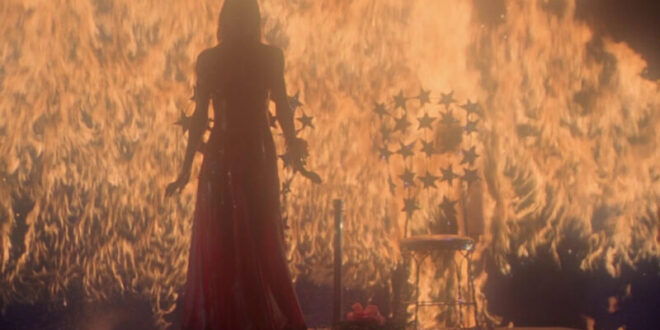
Few horror films have left as lasting an impact as the original Carrie. Directed by Brian De Palma and adapted from Stephen King’s first published novel, the film is widely considered one of the greatest horror movies ever made. In fact, in 2022, it was selected for preservation in the National Film Registry by the Library of Congress as being “culturally, historically, or aesthetically significant,” which probably means something.
Carrie‘s Origins
Released in November 1976, Carrie helped launch Stephen King’s career as one of Hollywood’s most important sources of horror stories while proving that the genre could deliver both critical acclaim and commercial success (something that was sorely lacking back then, with few exceptions). Produced on a modest budget of approximately $1.8 million, the film grossed nearly $34 million worldwide and remains one of the defining horror films of the 1970s.
Brian De Palma directed the film from a screenplay by Lawrence D. Cohen, with haunting music by Pino Donaggio and cinematography by Mario Tosi. The cast includes Sissy Spacek as Carrie White, Piper Laurie as her fanatically religious mother Margaret White, Amy Irving as Sue Snell, William Katt as Tommy Ross, Nancy Allen as Chris Hargensen, John Travolta as Billy Nolan, P.J. Soles as Norma, and Betty Buckley as gym teacher Miss Collins.
The Story
The story follows Carrie White, a painfully shy high school senior who endures relentless bullying from her classmates while suffering emotional abuse at the hands of her deeply religious mother. As Carrie discovers that she possesses powerful telekinetic abilities, those powers grow stronger alongside her emotional turmoil. When an unexpected invitation to the senior prom offers the possibility of acceptance and happiness, events spiral toward one of the most unforgettable climaxes in horror movie history.
Although remembered for its supernatural finale, Carrie spends much of its running time exploring very real emotional pain. The bullying Carrie experiences feels disturbingly believable, making the audience sympathize with her long before her telekinetic powers come into play. Rather than presenting revenge as a simple victory, the film portrays it as a devastating consequence of years of cruelty, isolation, and humiliation.
Why People Relate to Carrie
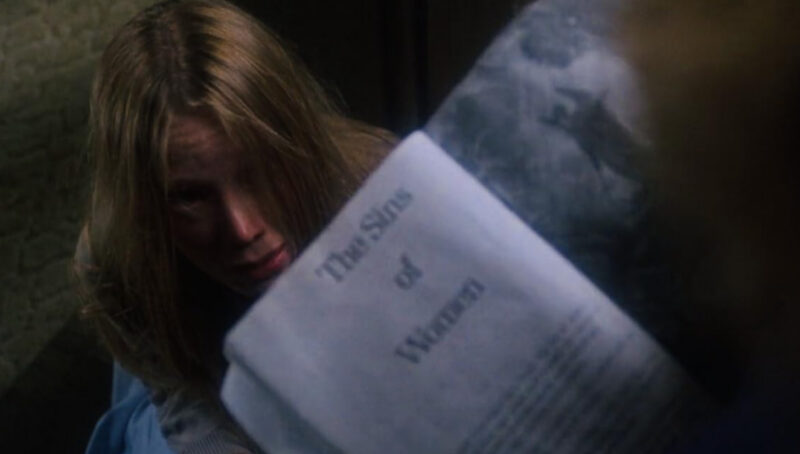
Though some are offended by critiques of religion, it’s simply undeniable: Religion serves as one of the film’s central sources of horror. Margaret White’s extreme religious beliefs dominate every aspect of Carrie’s life, leaving little room for love or understanding. Stephen King’s novel captures Carrie’s loneliness in one heartbreaking passage:
“Jesus watches from the wall,
But his face is cold as stone,
And if he loves me
As she tells me
Why do I feel so all alone?”
That being said, the movie skillfully walks that thematic tightrope. Rather than entirely criticizing faith itself, the story examines how religious fanaticism and emotional abuse can become psychologically destructive. In fact, one can easily transpose Carrie’s plight to an abusive non-religious household.
Puberty is another central theme. The film famously opens with Carrie’s first menstruation, an event that becomes both the catalyst for her supernatural abilities and a symbol of her transition into adulthood. King has said the novel was inspired in part by memories of isolated girls he knew while growing up, giving the story an emotional authenticity beneath its supernatural premise.
At its heart, Carrie asks what happens when someone who has spent a lifetime powerless suddenly gains extraordinary power. Instead of offering simple justice, the film presents a tragic portrait of trauma erupting into catastrophe.
The Sights
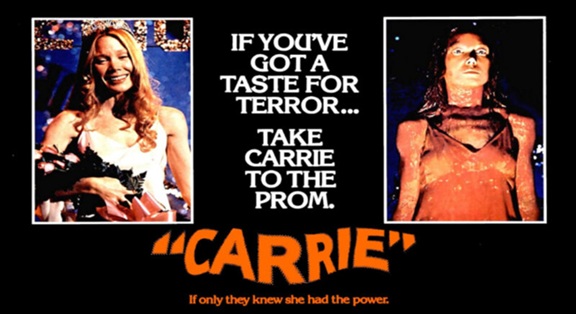
Visually, Carrie showcases many of Brian De Palma’s signature filmmaking techniques. Elaborate tracking shots, stylized camera movement, slow-motion cinematography, and inventive visual storytelling build suspense with remarkable precision. The climactic prom sequence remains one of cinema’s greatest examples of sustained tension. De Palma gradually increases the audience’s anxiety by revealing the impending disaster while Carrie herself remains blissfully unaware, allowing every moment to build naturally toward the devastating conclusion. During the climax, De Palma’s use of split-screen photography heightens the chaos without sacrificing emotional clarity.
The Performances
Much of the film’s power comes from its performances. Sissy Spacek delivers what many critics consider one of the finest performances in horror history. Rather than portraying Carrie as merely awkward or strange, she imbues the character with vulnerability, innocence, and quiet dignity, ensuring audiences empathize with her even as events descend into horror.
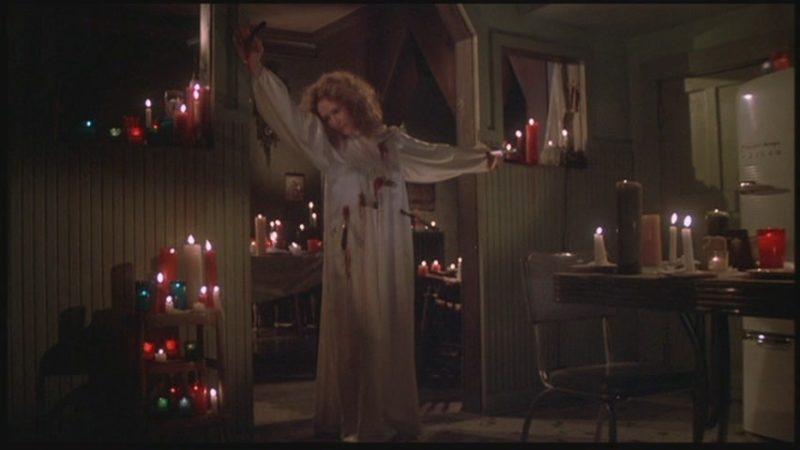
Piper Laurie is equally unforgettable as Margaret White. Although she was initially uncertain about accepting the role, her portrayal of Carrie’s domineering mother became one of cinema’s most iconic horror performances. Their work earned both actresses Academy Award nominations — Spacek for Best Actress and Laurie for Best Supporting Actress — making Carrie one of the rare horror films to receive acting recognition from the Academy Awards.
Carrie Established Stephen King
The film’s success also helped establish Stephen King as one of Hollywood’s most adaptable authors. Its critical and commercial triumph paved the way for acclaimed adaptations including The Shining, Misery, Stand by Me, The Green Mile, and The Shawshank Redemption. At the same time, Carrie influenced generations of filmmakers by blending teen drama, psychological horror, supernatural terror, and heartbreaking tragedy into a single story. Many later teen horror films borrowed its emotional structure and visual style.
Weird Facts
Several behind-the-scenes stories have become almost as famous as the film itself. Stephen King initially threw away the first few pages of the novel because he believed no one would want to read about a teenage girl. His wife, Tabitha King, rescued the manuscript from the trash and encouraged him to finish it — a decision that ultimately changed both of their lives. John Travolta appeared in Carrie shortly before becoming an international superstar through Saturday Night Fever and Grease, while Sissy Spacek remained in character and costume throughout much of the audition process to fully inhabit Carrie’s painfully shy personality.
The film also concludes with one of horror cinema’s most influential jump scares, an ending that has inspired countless later films, including entries in the Friday the 13th franchise (especially the first one, which offers a pretty significant surprise).
More than five decades after its release, Carrie remains a landmark of horror cinema because it succeeds on multiple levels. It delivers genuine supernatural terror while never losing sight of the human tragedy at its center. Its exploration of loneliness, bullying, religious extremism, and the universal desire to belong continues to resonate with audiences, ensuring that Brian De Palma’s adaptation remains as emotionally powerful as it is frightening.