 PopHorror Let's Get Scared

Child’s Play 3 is often ranked near the bottom of the Chucky franchise, overshadowed by the groundbreaking original, the fan-favorite Child’s Play 2, and the wildly different Bride of Chucky. Over the years, it has developed a reputation as one of the series’ weaker installments, but that assessment may be harsher than the film deserves.
While it undeniably suffers from a rushed production schedule, it also delivers an atmospheric setting, memorable practical effects, some of the franchise’s nastiest kills, and a pivotal moment in Chucky’s evolution from terrifying supernatural villain to a more overtly silly horror icon.
Child’s Play 3 Was a Basic Success
Released on August 30, 1991, Child’s Play 3 was directed by Jack Bender and written by franchise creator Don Mancini. The film stars Justin Whalin, Perrey Reeves, Jeremy Sylvers, Travis Fine, Dean Jacobson, and once again features Brad Dourif as the unmistakable voice of Chucky. Produced by Universal Pictures on an estimated $13 million budget, the film earned approximately $20.6 million worldwide and serves as the third installment in the original Child’s Play series, following Child’s Play 2 (1990).
The Story (Yes…There is a Story!)
One of the film’s biggest changes is that Andy Barclay is no longer a frightened little boy. Eight years after surviving Chucky’s latest rampage, Andy is now 16 years old and attending Kent Military School, where he hopes to leave his traumatic childhood behind. Unfortunately, the company responsible for manufacturing the Good Guy dolls decides to revive the product line, and during production Chucky is accidentally brought back to life once again.
Determined to finish what he started years earlier, Chucky tracks Andy to the military academy. But after encountering a young cadet named Ronald Tyler, Chucky shifts his attention toward acquiring Tyler’s body instead. This creates a refreshing dynamic. Instead of desperately trying to convince skeptical adults that his doll has come to life, Andy now knows exactly what Chucky is capable of. His challenge isn’t proving the impossible —i t’s protecting an innocent child who has no idea what’s coming.
A Military Academy Unlike Any Other
Perhaps the film’s greatest strength is its setting. Rather than another suburban home or toy factory, Child’s Play 3 unfolds inside a strict military academy filled with drills, barracks, firing ranges, authoritarian instructors, and rigid discipline. The environment immediately gives the movie a distinct atmosphere unlike anything seen in the previous films.
The setting also works thematically. Chucky embodies absolute chaos, while the academy (at least when assessed conventionally) represents absolute order. Every aspect of military life depends upon discipline, hierarchy, and obedience — qualities completely at odds with Chucky’s unpredictable, murderous personality. Watching him wreak havoc inside such an orderly institution gives the film an identity all its own.
Justin Whalin’s Older Andy
With Andy now a teenager, Alex Vincent did not return to reprise the role. Instead, Justin Whalin steps in as an older Andy Barclay. Whalin’s portrayal reflects years of unresolved trauma. His Andy is angry, distrustful, guarded, and rebellious. More importantly, he’s finally old enough to physically fight back against Chucky.
The earlier films centered on a simple question: How do you convince adults that an impossible monster exists? Child’s Play 3 asks something much darker: What happens when you’ve spent your entire childhood battling a monster no one believes is real? That lingering psychological damage gives Andy more depth than he often receives credit for.
Brad Dourif Steals the Show Again
Whatever criticisms can be leveled at Child’s Play 3, Brad Dourif’s performance remains consistently outstanding. By this point, Chucky is no longer simply a frightening killer trapped inside a doll. Dourif infuses him with sarcasm, impatience, narcissism, vulgarity, and dark humor, making him both terrifying and oddly entertaining.
This film represents a fascinating transition for the character. Chucky is still intended to be frightening, but audiences are beginning to enjoy spending time with his increasingly oversized personality. That evolution would fully blossom in Bride of Chucky, but Child’s Play 3 sits right at the turning point.
Practical Effects That Still Impress
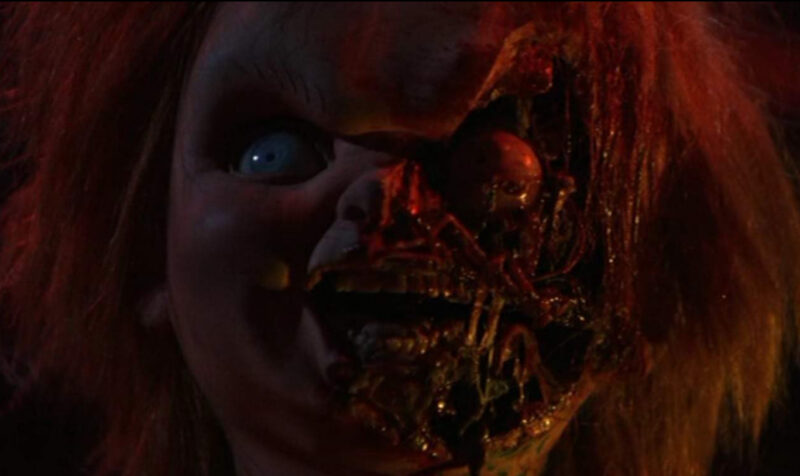
Like its predecessors, Child’s Play 3 relies heavily on practical effects rather than computer-generated imagery. The production combines full-sized animatronic puppets, mechanical facial effects, puppeteered dolls, stunt performers, miniatures, and optical compositing to bring Chucky convincingly to life. One of the franchise’s greatest strengths has always been finding inventive ways for a three-foot-tall killer doll to navigate environments built for adults, and this installment continues that tradition with impressive craftsmanship. Even decades later, much of the practical work still holds up remarkably well.
Memorable Kills
The film is frequently overlooked when discussing Chucky’s best kills, yet it features some of the franchise’s most memorable death scenes. Among them are the gruesome Achilles tendon attack, the horrifying trash compactor sequence, the deadly barber shop scene, the chaotic shooting-range massacre, and the ambitious climax at an amusement park.
The barber shop sequence is particularly effective because Chucky manipulates events so that someone else unknowingly carries out the killing. Likewise, the trash compactor transforms an ordinary industrial machine into one of the movie’s most disturbing death traps. The amusement park finale, meanwhile, delivers one of the largest and most elaborate action sequences in the original trilogy.
Why the Film Struggled
Much of the criticism surrounding Child’s Play 3 stems from circumstances behind the scenes rather than anything on screen. The sequel was produced at remarkable speed, arriving just over a year after Child’s Play 2. Series creator Don Mancini has since acknowledged that he felt creatively exhausted and believed he was being pushed into writing another sequel before he had enough fresh ideas.
That rushed production occasionally shows. The basic formula remains familiar as Chucky returns, hunts Andy, leaves a trail of bodies, and is ultimately confronted once again. Although entertaining, the story sometimes feels like a franchise repeating itself rather than breaking new ground. Then again, that is sometimes exactly what franchise fans want. Their attitude sometimes is that old adage: If it ain’t broke, don’t fix it!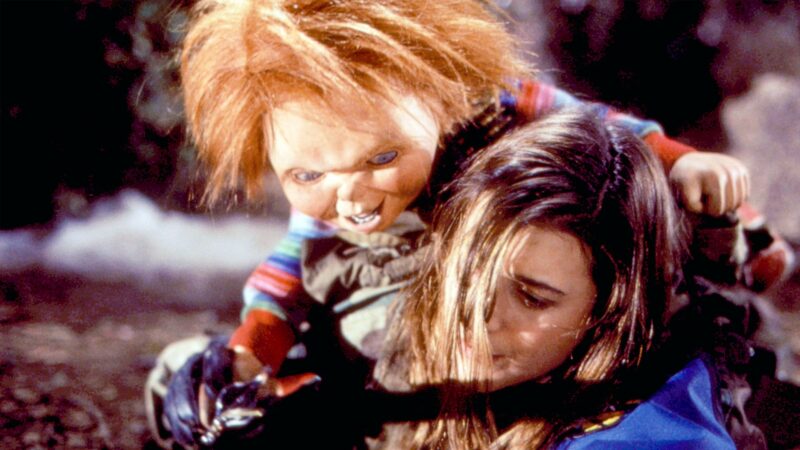
Critical Nonsense
Critics were considerably less enthusiastic than they had been about the previous two films, and the movie became only a modest financial success relative to its budget. Its disappointing reception helped convince the filmmakers that the series needed reinvention rather than another straightforward slasher sequel.
The James Bulger Controversy
One of the darkest chapters associated with Child’s Play 3 has little to do with the film itself. Following the tragic 1993 murder of British toddler James Bulger, sections of the British media speculated that the young perpetrators had been influenced by the movie. The story quickly became international news, permanently linking Child’s Play 3 with the case in the public imagination.
However, investigators never established that the film directly inspired the crime. Despite this, the controversy significantly damaged the movie’s reputation in the United Kingdom and remains one of the most frequently discussed aspects of its history.
A Turning Point for the Franchise
Looking back, Child’s Play 3 occupies a fascinating place within the franchise. It represents the end of the series’ original, relatively serious slasher era before Bride of Chucky reinvented the character as the wisecracking star of a horror-comedy. In many ways, the film serves as a bridge between those two versions of Chucky, retaining much of the menace of the early movies while hinting at the larger-than-life personality that would soon define the franchise.
It’s Still Good!
Child’s Play 3 isn’t as emotionally engaging as the original or as consistently exciting as Child’s Play 2, and the rushed production and familiar story structure are difficult to ignore. Still, dismissing it as one of the franchise’s weakest entries overlooks everything it does well. Its military-school setting gives it a unique identity, Justin Whalin provides a believable older Andy, the practical effects remain impressive, the kills are among the series’ most memorable, and Brad Dourif once again proves why Chucky remains one of horror’s most enduring villains.
Far from being a failure, Child’s Play 3 is best viewed as a flawed but entertaining transitional film that deserves considerably more appreciation than it usually receives.
\