 PopHorror Let's Get Scared
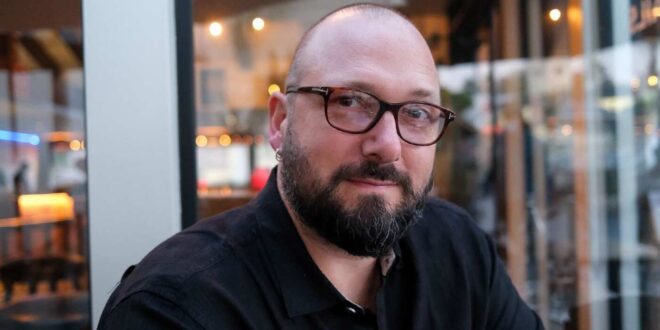
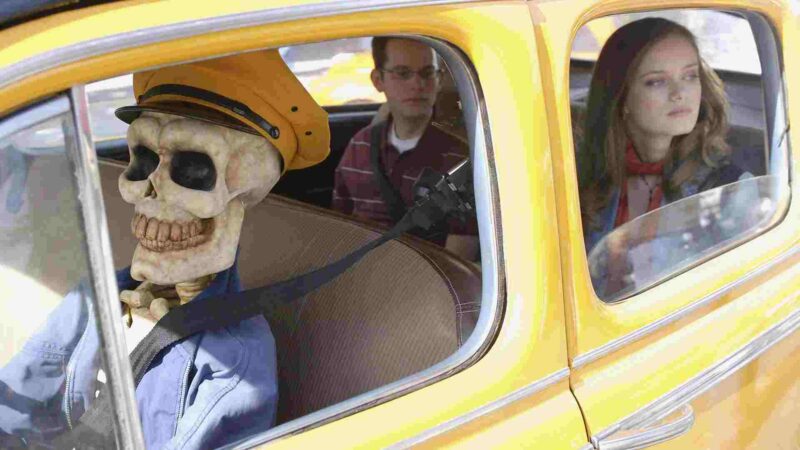
Over the past 35 years and across more than 100 films, J.M. Logan has had his hand in countless creative pots. From visual effects in The Passion of the Christ to makeup in Texas Chainsaw Massacre: The Next Generation and the animatronics that brought skeletal cab driver Benny to life in Halloweentown, Logan’s wide-ranging career has seen him tackle every aspect of production. Now, that path has led him to yet another endeavor — writing and directing THE RELIC | DRAGON.
Blending cosmic horror, Viking legend and treasure-hunting adventure, the film marks the feature debut of The Relic Universe and builds on the success of Logan’s short film The Relic. While the short — produced under intense pandemic conditions — served as a way for the team to prove themselves worthy of delivering high-end practical effects and an immersive atmosphere on an independent scale, THE RELIC | DRAGON puts their mastery on full display. The film boasts a riveting plotline, real-world mythological inspiration and a portal to a golden hell that showcases something far scarier than any monster lurking in the dark — the impact of human obsession.
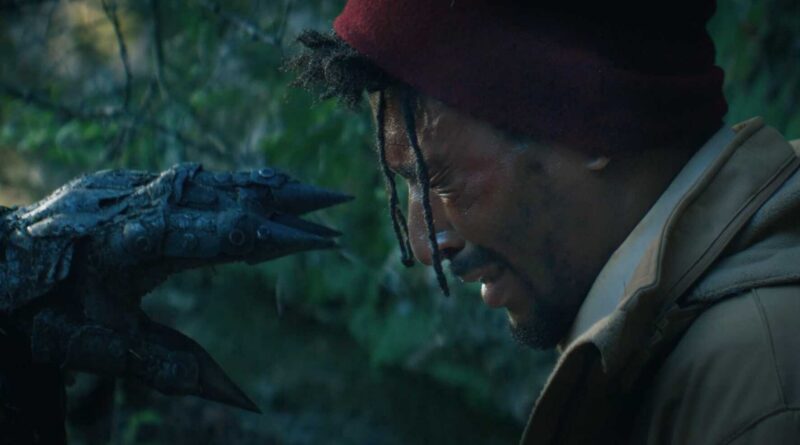
Set against the vast and mysterious landscapes of Texas, THE RELIC | DRAGON follows two estranged sisters — Aura (Sarah Jack), a thrill-seeking adventurer who vanishes while tracking a mysterious artifact, and Echo (Taylor Bini), a skeptical academic who is forced back into a world of myth and secrets that she previously abandoned. What begins as a search to unravel a historical mystery becomes a race against an ancient evil that was buried for centuries and waiting to be awakened. Now that it’s awake, it could reshape the fate of humanity.
PopHorror had the pleasure of chatting with Logan about the inspiration behind this latest undertaking, the freedom that came with shooting in his home state of Texas, how the film’s special effects took form and the thrill of having something he created positively influence the masses.
PopHorror: Congrats on this new project! I watched this and the short film and really enjoyed both. Before we get into the feature length, can you share a bit on how the short came together?
J.M. Logan: Thank you! Yeah, the short film, we shot and finished in 2020, but our major fest run was in 2021. It was our COVID project. We built the short film and were gonna shoot in March of 2020 and then March of 2020 hit. After a couple of months of sitting around, we were all like, “Should we talk about maybe doing this?” We built it from the ground up as a project intentionally to be like, “How do we still be creative in this environment?” We built our own white paper. We were among the first projects approved by SAG once people started shooting again. We were the first film permit issued in San Bernardino County. We had PPE, we had a black light. We sterilized the set every night. Probably a little bit overboard in hindsight, but overall, we built it specifically for that direction. And the best part about it was that everyone was available. Every single person that I asked said “yes.” I got my dream cast, dream crew, everything. It was a very fortunate project.
PopHorror: That’s amazing! When you were in the process of making the short, did you know you’d want to expand to a feature length? Or did that thought come more recently?
J.M. Logan: The thought kind of grew as we were doing it. I’d done Lunch Ladies, which was horror comedy. Before that, I’d done some comedies, some dramas, but my heart has always been in horror. But because my heart was there, it also made it a little bit scarier to try and tackle. And cosmic horror in particular, it’s just so easy to get it wrong. I was worried that I wouldn’t be able to pull it off. So, when we were successful with the short film, people liked it and it did great on the short film circuit, I started feeling like maybe with this team, I could pull off some bigger stuff.
I started thinking about The Relic in terms of creating a universe around it, a series of feature films that all related together by mythology rather than directly by character. Kind of like The Conjuring universe where you’re starting with The Conjuring, but you’re also shooting off The Nun, Annabelle and a variety of other things. Cosmic horror can happen anywhere at any time, so it’s really an open playing field.
I love history, I love mythology and I’ve always wanted to tie real earth, human civilization, history and mythology together into a kind of cosmic horror universe. There are stories that keep us on track, that are designed to impute morality and give us the tools for the future. That’s how mythology works. It’s why it’s there. If you take the idea that mythology, at some point, leapt off of some real event, got transformed over thousands of years and many retellings, was translated from verbal history into writing and from one language to another, eventually we get the gist in mythology. But imagining that mythology started from an ancient root that really happened in history, that’s the ground that I decided I would focus on because history and mythology are fascinating.
We can tie those things together. There are plenty of holes in there for me to fill with monsters. That was the impetus for The Relic as a franchise – that each story would center around a different relic, some kind of ancient something that has existed in planet earth and in our real history, real mythology, and pulling back the veil on the things that could have happened because you can’t say that it didn’t. Some object that serves as a gateway between our world and somewhere else. That’s the idea that I started building on after the short film. I’ve written five or six other stories that can all fit into this same myth in our universe.
Setting the scene in Texas
PopHorror: I understand that THE RELIC | DRAGON was filmed in Texas. Do you have roots there or did it just seem like a cool place to shoot?
J.M. Logan: This film was really spurred on from me moving back to Texas in ‘22. I grew up in Austin and moved to LA in ‘96. Post-pandemic, I started looking around and realizing every meeting that I had for two years had been on Zoom and I’m sitting in my home office. We got so used to doing things on video. What would it be like to go back to Texas and develop a film community there? Because the handcuffs you get by living and working in Los Angeles can be pretty extensive. Even though you get an amazing opportunity and there’s no better place in the world to learn how to make movies, it can be really difficult. The competition is incredibly fierce and the people that work there have become, in many ways, very jaded. It can be difficult to get creative projects moving when you don’t already have giant forces moving behind you.
So, I thought Texas was a great place to go back to my roots and find a creative community. It was incredible. It was the best thing I’ve ever done in my life, moving to Texas to make movies. I went from a town that had been telling me “no” for 15 years to a town that was falling over each other to say “yes.” Everyone said “yes.” Everyone wanted to make stuff just because it was cool. No one asked, “How much am I getting paid?” Everyone was just like, “How do we make this cooler?” It’s a community I really vibed with. I wrote DRAGON intentionally around shooting it in Texas. I combined real-world mythology and Texas history so that I could set it specifically in Texas.
PopHorror: What was it like filming there in the Texas wilderness? What benefits and challenges came with that setting?
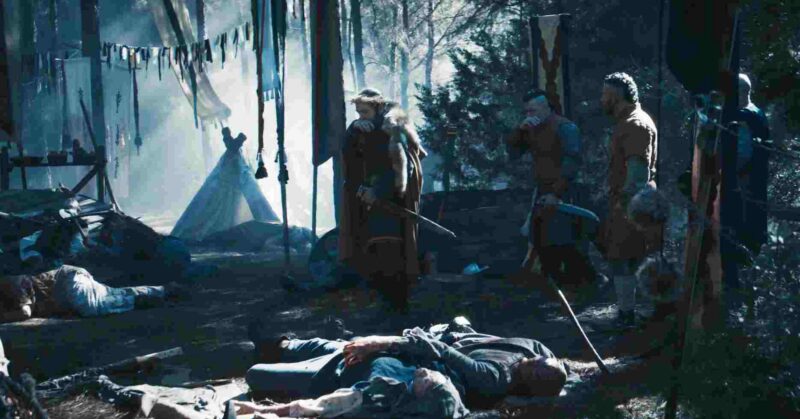
J.M. Logan: It was the hardest thing I’ve ever done in my life. But I wrote it because outdoor locations are easy to control and easier to find. And a lot of times, it doesn’t really matter where you are. In this case, I wrote it for a primordial forest, a forest that hadn’t been pierced in 500 years in the outskirts of Palo Duro Canyon in Northern Texas, which is outside Amarillo. We shot for a week in Amarillo to get our Palo Duro exteriors, but then the rest of it, I was able to shoot more locally close to Austin. I found this amazing ranch just north of me in San Marcos that was, more or less, primordial forest. It was really cool. One of our actors had access to some land out there, so we were able to make arrangements to shoot there. The forest was incredible.
Our basic day was, we would park in a field where our trailers and stuff were and then we’d take a 4×4 into base camp, which was further in. Then we’d take a Polaris in even further. Then we had to walk about a quarter mile to our filming location. It was a lot of work. We had to move all our equipment, all our people and everything out there. We’re a very small crew. We had maybe 20, 22 people most days. Often it was less, between 12 and 15 people. But it was so worth it.
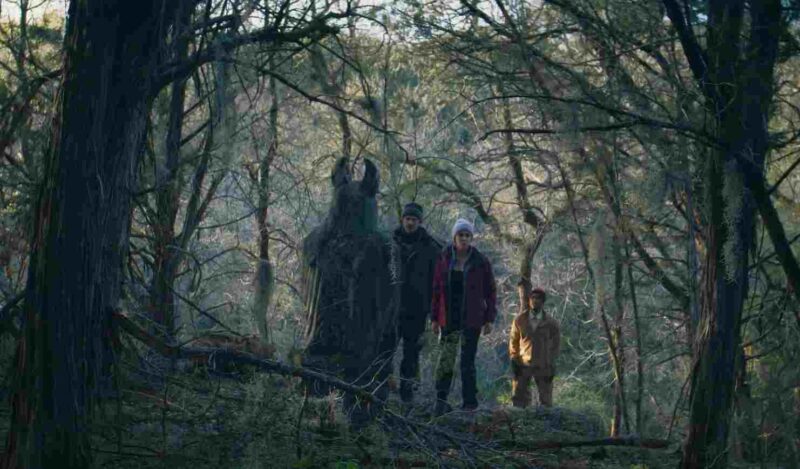
The location we found was absolutely amazing. And I’ve always wanted to shoot Texas forest in a very creepy kind of scenario because it’s got such a unique look to it – all of the junipers and cedars, there’s broken, dead branches everywhere and it feels dangerous. I’ve always wanted to use that in an effective way in a horror movie because I haven’t seen it before. I was really happy that we were able to find the locations that helped me accentuate it and also set it in a place where it could only happen there. It’s very Texas. There’s only one place that looks like that.
Drawing from legend
PopHorror: How much of DRAGON is based on actual mythology that’s out in the world and how much is fiction, especially regarding the ring and the treasure?
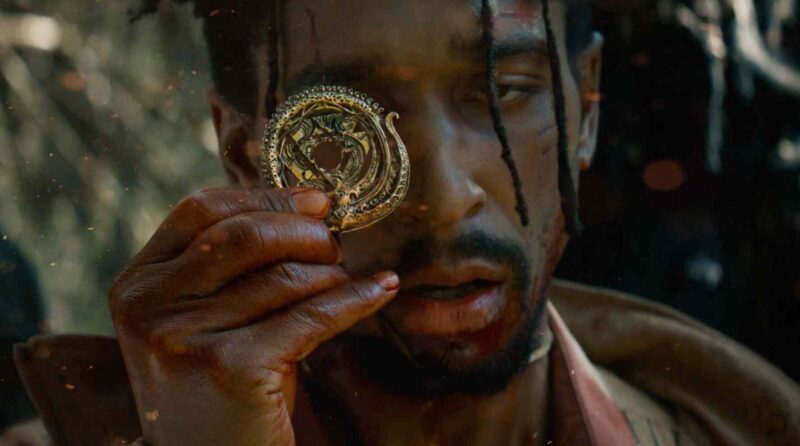
J.M. Logan: My intention with the RELIC movies, I’m a huge fan of history and mythology, and you don’t need to make stuff up. Everything that’s already there is so fascinating and so interesting. It’s about harnessing it and shaping it toward something that feels intentional. The Andvari’s ring is based in one of the Viking sagas. It’s a small part of one of the sagas, but you can lift that part out and say, “What if this was actually a real object that caused people to become so consumed with possessing it that they would be willing to kill everyone around them?” That’s in Viking mythology. It’s actually there. I wrote the movie in a way that if you look up any word, any name, any event in the movie, you’ll find a Wikipedia page on it. It’s all there. In many ways, it releases me from the obligation of having to write all of this history and mythology because I can tie it back to real stuff. And it gives people that are interested in this kind of thing a super deep well to dive into after this. They’ll find out where I changed some things or where I got some things wrong, but that’s the fun of exploration – diving into the things that already exist and have been moving us for thousands of years, and trying to tie and shape movies connected to that.
PopHorror: I think my favorite part was when they looked into the ring and it’s this whole golden, creepy hell. How did that concept come to be?
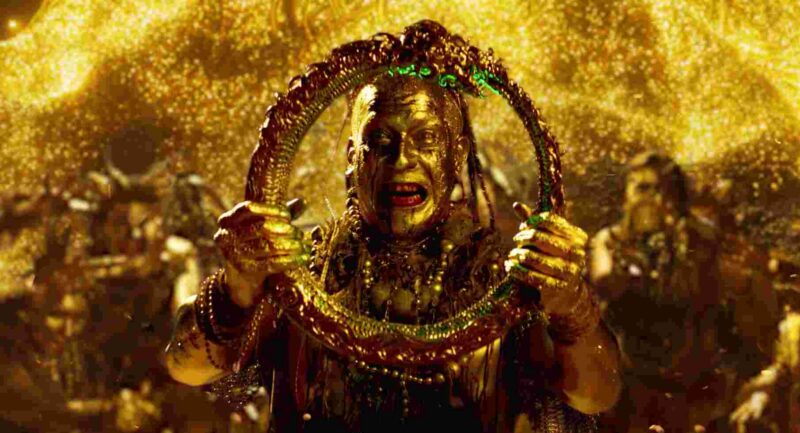
J.M. Logan: We call it the Gilded Abyss, that’s the name on the script. It was actually my wife’s idea. She’s my closest collaborator and we’re bouncing ideas around all the time. The DRAGON script went through many different phases, always being guided by history and mythology. But ultimately, the story is about these two sisters and their split and their disagreements, and then coming back together to remember that they love each other. That’s really the core value of the story that we’re gonna care about during the movie.
So, we had to try and figure out what happens when you grab this ring. What do you actually see? Where does it take you? That’s when [my wife] Andrea said, “What if it was a hell made of gold?” And I was like, “Yes, that’s perfect!” We built from that idea, that it’s a thing that promises you something you’ve wanted your entire life. But when you touch it, it takes part of your soul, part of your being, part of your interdimensional personality, or whatever you want to call it, into this horrible place where something bigger than you and unexplainable seems to draw pleasure from your need for these objects. It feeds on greed.
PopHorror: And I know you have a very strong background in special effects – how did that come into play while building the Gilded Abyss?
J.M. Logan: When trying to figure out how to do this, we got together with our makeup effects people because we’re very focused on building things practically as much as possible. We love CG as a storytelling device, but we feel like we should only use that when we can’t actually build something. On The Relic short film, we were like, “How do we build a 12-foot-tall monster?” Well, we fill it with air, build it out of trash bags and bubble wrap, and stick it in the dark so when you’re lit with flashlights, you get a lot of flexibility.
It’s really all about using our effects background. I say “our” because my other two partners Roger and Matt are both effects guys. We came up doing effects together for 25 years. Our first discussion is always, “How do we pull this off practically? How do we shoot this with elements that are constructed by art department with makeup effects and miniatures?” Whatever it is we need to do to pull something off practically is where we always start, and then we use visual effects to combine those elements together. Occasionally, we’ll bring in a little CG here or there, but our aim is always to build something practically. I feel like you just connect better to it as a human when you’re watching a story. The actors connect better to objects when they can see it. Everything in the Gilded Abyss is all a photographed element that we shot on a green screen, including the giant monster, which was a big puppet.
PopHorror: That’s amazing! Are there any other practical effects that you’re especially proud of in this film?
J.M. Logan: The Gilded Abyss really turned out so great. Our makeup artists, our costumers, specialty prop builders, everybody came together to dress all these people, all the Hellions that we had. They’re all painted gold and the gold formula that we came up with was essentially baby oil and pyrite powder. That meant they were completely covered in baby oil and just dripping gold everywhere. They couldn’t touch anything because it got everywhere. But it was really fun coming up with all the different costume pieces and the different layers. And then the big puppet that we had that was more of a dark figure in the forest, we painted him gold so that we could have him in the Gilded Abyss. Those are by far our biggest effects.
The other effect I’m really, really happy with is when Echo gets taken down by the hands that strangle her in the forest. She gets grabbed by the hand and pulled on the ground, and then all the hands come alive in the leaves and start to tear her face apart, which is a hallucination for her. I’m really happy with how that turned out. And Taylor’s performance just completely sells it.
Casting THE RELIC | DRAGON
PopHorror: The core four cast members are so good. Did you find them pretty quickly when you were casting the film?
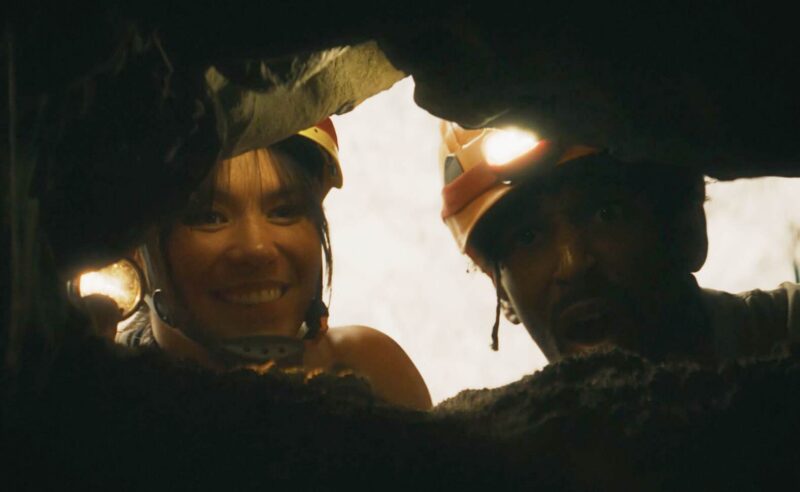
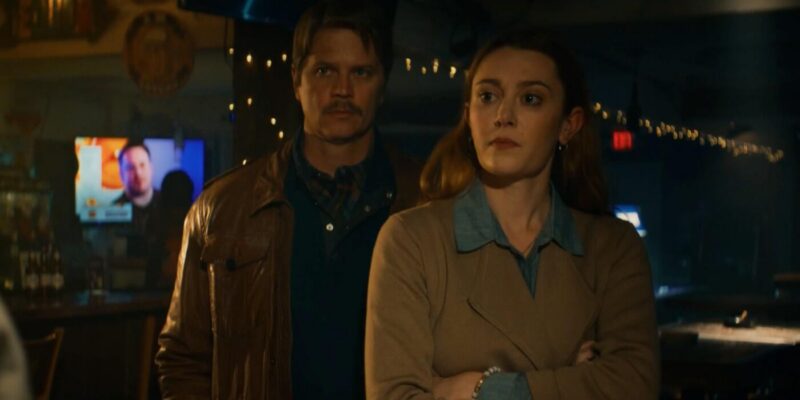
J.M. Logan: No, it was not quick at all. Casting is finding great actors that fit the role perfectly, but also people that have lives that can endure a multi-month shoot and people that are happy to show up every day for work. It was gonna be a long shoot. Our schedule started out at 38 days and we ended up shooting close to 50 by the time we were done. And so finding people, especially in a low budget movie, who can commit that amount of time narrows the playing field. You can’t just hire a great actor who’s perfect for the role. Their life also has to be adaptable to this kind of sporadic filming. We generally shot long weekends, Fridays to Mondays, because we’re very low budget and we can only really afford to shoot when people aren’t working. I can get a lot more people to come out and help on a weekend when I’m not asking them to sacrifice better paying jobs. That was the strategy that we employed.
I started by going to all of the acting schools in Austin because I had no network here for actors like I did in LA. I started talking with the instructors and sat in on some classes. Then once I started finding some actors who were really great, they tended to know a lot of other really great actors. Richard Jones was key in helping me find people initially because he’s very connected to the acting scene. Richard plays Edward, and he brought a couple of people to the table. We brought in a casting director, Ashley Guaragna, that helped us find Luis (Hollis Edwards III) and then the two little girls in the flashback scenes.
Casting ended up taking four months or so. We started with Zoom auditions and then I’d narrow the pool down. Then I did weeks of in-person auditions, switching cast members around to see who clicked with who because it’s not just about being a great actor. It’s also, do you have chemistry with these other actors? Everyone was super flexible and really nice about indulging my need to do these hour-long pre-rehearsals and in-person auditions. Taylor in particular, as soon as I saw her, I was like, “She’s in the movie.” But I was vacillating between her playing Echo and playing Aura because her Aura audition was also incredible. There was one day where we did three or four hours and she played Echo in the first half of the day with one group of people, and then Aura the second half of the day with a different group of people. I’m so glad that we got that time because finding the right chemistry of actors to fit together is so important. It’s an ensemble piece, really. The two sisters are the leads, but ultimately, everyone’s got to feel like they’re baked together. It was definitely a long, extensive process and it was totally worth it.
A little bit of everything
PopHorror: I’d love to shift gears and talk more about your background. You have more than 100 credits to your name, which is super impressive. When did this love of film begin? Is this something that started in childhood or did it come later in life?
J.M. Logan: I saw Star Wars when I was 4 years old and before I even knew I needed a job in life, I knew I wanted to work in movies. I never wanted to do anything else. I was connected to the story. I was connected to the spectacle. I was connected to everything about it. It was just a wide-eyed switch flip. That was it for me. From the time I was really young, I was like, “How do I work in movies?” I’ve always been a very directed person, and at one point my dad was playing guitar at a community theater in a show and I asked if I could go work backstage. So, from 12 years old to 19 basically, I worked in theater. I was 14 years old taking the city bus from junior high school to go work my five-day-a-week job in the theater. From there, I met actors and other people that were working in movies in Austin. I connected to the Texas Film Commission. I started getting on sets when I was 15, 16 years old, working in art departments and anything else I could do to be involved in movies. And because it was the ‘80s and the horror renaissance, horror was my thing.
I started in makeup effects and that’s where I first felt like I wanted to direct. But when you’re that young and you’re in a place like Austin in the ‘80s without much resources and there was no internet, I learned how to make movies by going to the public library. I’d get my hands on a Fangoria or a Starlog or a Cinefex, anything like that from the newsstands randomly. That’s essentially how I learned to make movies with my friends. The idea of making movies, to me, has always been a very holistic process. I learned how to do everything because I had to, but that also means I loved doing everything. I focused on special effects and that was my passion, but at the end of the day, I really wanted to make movies – not just make monsters. But special effects was the first thing that I was really pushing toward, so that’s where I started.
PopHorror: Do you feel like dabbling in a bit of everything in those early years helped make you a better writer and director in your current projects?
J.M. Logan: I’ve done every job there is to do on a movie set and I love every part of it because I love making cool stuff with my friends. That’s what it really comes down to after 35 years working in movies. That’s all I wanted when I started. And now I’ve gone through 35 years of transitioning through multiple different careers in filmmaking and just want to make cool stuff with my friends again. But the more you know about all those processes, the better filmmaker you can be because you understand what needs to get done. If you see something falling behind or something not going the right direction, you can head it off early.
That’s why I was able to shoot DRAGON with such a small crew because people in Austin are more like me than people in LA are. People in LA focus on one thing and they get to be really, really good at it. People in Austin, by necessity, need to know how to do everything and then shaping takes more time to get really good at that stuff. When you’ve got a whole team of people that all know how to do everything, we can all fill in for each other’s jobs and change each other’s hats, and make sure that everyone’s keeping on track. It becomes a tight family of people that are all making the same thing together and that, to me, is the most beautiful collaborative relationship you can have in a creative industry.
PopHorror: You’ve lent your expertise to so many different genres over the years, from Halloweentown to The Passion of the Christ. What is it like to float between all of them? And is there one common thread amongst the genres when you’re helping bring them to life?
J.M. Logan: To me, the common factor is telling great stories. I love horror, I love monster movies. I also love comedies, I love dramas, I love big sci-fi epics. I always connect to really well-told stories, compelling characters, interesting stories, situations, things I haven’t seen before. Again, it goes back to mythology. It’s all stories for life. When you connect to people through film, you get to experience a world that you wouldn’t get to experience yourself, and maybe you wouldn’t want to experience yourself in a lot of ways. But that’s the beauty of storytelling. It gives you a window into something you haven’t experienced before, a life you could never live or friends you could never have. That’s what we really connect to. And having worked on so many different genres with so many different, just absolutely amazing, inspiring filmmakers all helps me understand what it is that I want to be making and the stories that I want to tell. That’s really the unifying factor between slicing throats in action movies to doing something more sensitive. It all folds into the whole of telling a story and affecting an audience in the way that we want to affect them.
Meeting the fans
PopHorror: Speaking of audiences, I saw that you’ve done some horror conventions. What are those like for you? What’s it like getting to talk to fans who love your work?
J.M. Logan: It’s great. I’ve only started doing this very recently and mostly to promote the movie. Independent film distribution right now is in the worst place it’s been in my generation. You get a lot of people who have been telling us that the movie’s great, but no one’s going to see it because it doesn’t have any big name stars in it. And I’m like, “I think there’s probably people that would disagree with that.” And so my going to conventions and all of the marketing efforts that I’ve made for the last three or four months have been toward, is this actually true? Do people only go see movies because there’s big stars in it? Because people spend a huge budget on it? By going to conventions, the answer is resoundingly “no.”
People want compelling stories. They want compelling characters. The cast and directing and producers can be reinforcing factors in terms of legitimacy because the most valuable thing we have right now is attention for people. There’s so much stuff. We’ve got so much distraction that anytime you can get people to focus on one thing, it’s great. Stars and directors and pedigrees do allow people to feel more confident that they want to spend their time watching something that has those factors in it, but ultimately, genre fans in particular are like, “Just give me a great movie. I don’t care who’s in it.” And so, going to these conventions and talking directly with genre fans and introducing them to the movie and showing them the trailer, our website and all the stuff that we’re doing has been an incredibly rejuvenating experience. These people are enthusiastic about the genre, about independent movies, practical effects, stories well told instead of stories well polished. I found just a really strong confidence of feeling like there’s an audience that wants to see this movie. Figuring out how to get it to them, how to get it to a place where they can find it and know about it has been our focus for marketing.
But conventions have been great. Fans are awesome. In terms of my work and people being a fan of my work, that’s been a new thing for me. When you’re an effects guy, you’re building monsters for stuff and you’re just going from job to job to job. Stuff like Halloweentown, it was a great experience and we got to be super creative and create so many different, cool characters. It’s a dream job for an effects guy. But it was a movie for kids and I was in my 20s – we build the things, we shoot it and then it goes off and it’s on TV. Then we’re on to the next jobs. But now, 25 years later, the kids that watched Halloweentown in the ‘90s are adults. They have kids of their own and they’re showing their kids Halloweentown. I’m having these discussions now with fans talking about how that’s what got them into horror. And the character that I focused on, Benny, it’s become a landmark character for a lot of people. It makes me feel so good to know that something I made or had a hand in tweaked peoples’ life paths a little bit. It just feels good to do something that resonates with people. Benny’s a favorite and they also love talking about Chainsaw Massacre and Passion of the Christ. You realize how many lives you can touch by making films.
PopHorror: Oh yeah, I’m 33 and Halloweentown is still a staple every year!
J.M. Logan: That’s so cool!
Looking ahead
PopHorror: What’s next for DRAGON? Will it do a festival run? Is there a targeted release date?
J.M. Logan: We don’t have a time frame yet for official release. We’re still in post-production, but we’re close to being finished. We’re hoping very much for a meaningful festival premiere this fall. We submitted to a lot of places and we’re waiting to hear what’s going on with that. Regardless, we’ve been talking to a lot of distributors just to get a sense of the lay of the land. I’m focused right now on building our momentum behind us, our Instagram presence and our website presence. The more that we can get people showing that they will support independent movies, the more momentum we get behind us to show distributors that there is an audience for this movie. We’ve been doing a lot of Instagram posts, behind-the-scenes, and it’s been fun to dig back into the movie and create some new stories from the story we already built.
PopHorror: As far as THE RELIC universe as a whole, what’s next?
J.M. Logan: We are working very hard on developing the next projects. I’ve got sequel ideas for DRAGON as well as other stories that fit into THE RELIC universe. Some are ready to go and some we’re still building. Hopefully, once we get this movie out there, we can really focus on the next one. We’re going to be ready as soon as possible to get into the next movie.
PopHorror: Can’t wait to see what’s next! Is there anything else you’d like our readers to know?
J.M. Logan: One of the aspects of the movie that we’re really wanting to let people know about is that we have an earned equity program as part of the film. We’re a low-budget movie, we can’t afford to pay people what their rates are. Our decision at the beginning was to pay everyone favored nations, so every single person that worked on the movie got paid the same flat rate. It was for 12 hours inside our minimum wage restrictions to make sure that we were all above board. It didn’t matter if you’re a grip or an actor – everyone got paid the same day rate for working on the movie. But there’s a lot of work that goes into the movie that is not necessarily you being on set while you’re shooting. There’s a lot of prep work, a lot of meetings, pre-build time, and we didn’t have a budget to pay people for that.
So, we came up with an earned equity program that every single person that works on the movie will earn a piece of the producers’ net profits based on the number of days they worked. If you worked a ton of days, you get a larger portion. If you worked one day, you get a smaller portion. But even if you worked one day on this movie doing any job at all, everyone will have a percentage of the back end of the film.
We decided to do 35% of the producers’ net profits goes to the crew, 30% goes to the producers and 30% goes to the investors. We’re trying to create an environment where every single person that worked on the movie is an investor in the movie. They’re an investor of their time — not just the time spent on the film, but also the time building the skills that they needed to create the things that we are building our movie out of. We wanted everyone to feel like they have a participation window and ownership of the film. They certainly have creative ownership, and this helps them get financial ownership also.
This has become a hot button topic this year, and it should be. It’s a really interesting conversation to see how other people are doing things. Movies like Obsession [our review] are famously not sharing their profits in the same kind of way. And I have no judgement for that. When you sign up to do a movie, as long as the production pays what you agreed on, then your contract is done. There’s no should or shouldn’t to our policy. But it was something that we thought was really important for us when we started building the project to make sure that every person that worked on the film felt like their contribution was being honored. If we are to succeed, we succeed together. We built a family, and we want to make sure that everyone feels that their participation is being respected, both creatively and financially. If this movie takes off and does really well, we want everyone to make sure that they feel like they’re part of that.
PopHorror: That’s incredible. Is this something that happens often in film, particularly the independent space?
J.M. Logan: No, it’s not. But there have been some other movies that have started doing this. It’s been a little bit of an undercurrent. But I just felt like, if I can’t afford to pay people what they’re worth, the least I can do is show them if we build something that people really like and want to see, then they can be rewarded for their effort.
I would really love to see this become a trend for lower budget movies because at the end of the day, the way the traditional market is being structured is that investors tend to be the people that win the most out of something that becomes successful. People will say that the investor took the most risk. But that’s only if you put it in terms of money. We all take risks when we work on movies. We take risks because this is time out of our lives that we can’t spend on doing something else. Time is the most precious thing there is. If I spend a year working on a movie and an investor dropped $25,000 and did nothing else, then who’s actually taking the most risk there? That’s a year of my life that I’ve devoted to something. How do you compare that to a financial investment? Both cannot exist without the other.
I would really love to see more balance between the financial investment and the time investment because the time is not just the time you spend on the movie, but the time developing those skills you need to make the movie look great. All those things need to work in better harmony, and we would love to be at the front of starting to make that happen.
Thanks for speaking with us, Josh! Keep up with THE RELIC | THE DRAGON updates on Instagram at @therelicuniverse.